
Cognitive Dissonance in Relationships: Signs & Examples
Learn how cognitive dissonance shows up in relationships - real signs, examples, and steps to break the cycle and think clearly again.
 Berry Bits
·
July 7, 2026
·
9 min read
Berry Bits
·
July 7, 2026
·
9 min read
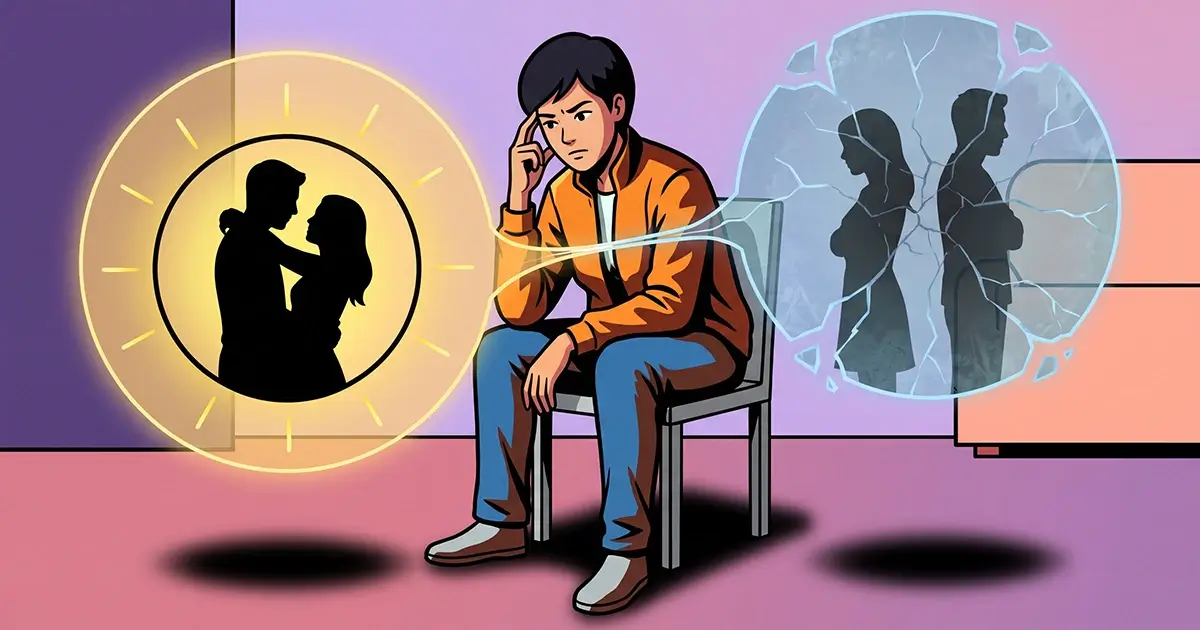
Have you ever stayed in a relationship that hurt you, all while telling yourself it wasn't that bad? That uncomfortable tug-of-war between what you feel and what you keep telling yourself is called cognitive dissonance.
It's one of the most common — and most overlooked — reasons people stay in relationships that no longer serve them. Understanding how it works can help you see your own relationship more clearly.
This isn't about weakness or bad judgment. It's a well-documented psychological pattern that affects almost everyone at some point, often without them realizing it's happening.
In this guide, we'll break down what cognitive dissonance in relationships actually looks like, walk through four real-life examples, and share practical ways to break the cycle.
What Is Cognitive Dissonance in Relationships?
Cognitive dissonance is the mental discomfort you feel when two beliefs, or a belief and an action, contradict each other. Psychologist Leon Festinger first described this in 1957, and it applies just as much to love as it does to everyday decisions.
In a relationship, this shows up as a gap between what you know (your partner treats you poorly, or the relationship isn't healthy) and what you believe (you love them, or this relationship is "the one"). Your mind doesn't like holding both truths at once, so it looks for a way to close the gap.
Instead of leaving or addressing the issue directly, many people resolve the discomfort by changing how they think about the situation. They downplay red flags, make excuses, or convince themselves the good outweighs the bad.
Why It Happens in Close Relationships
Relationships are emotionally loaded, which makes them a breeding ground for dissonance. A few reasons this pattern shows up so often:
- Emotional investment. The more time, love, and effort you've poured in, the harder it is to admit something is wrong.
- Identity protection. Admitting your relationship is unhealthy can feel like admitting you made a bad choice — and that's uncomfortable for anyone.
- Fear of loss. Loneliness, financial dependence, or fear of starting over can push your mind toward justification instead of honesty.
- Intermittent reinforcement. When good moments are mixed with bad ones, your brain clings to the good ones as "proof" the relationship is fine.
- Social pressure. Friends, family, or cultural expectations around relationships and timelines can make honest reassessment feel riskier than it is.
None of this means you're weak or foolish. It means your brain is doing exactly what brains do: looking for the path of least emotional resistance.
Cognitive Dissonance vs. Normal Relationship Doubts
Every relationship involves some doubt. Wondering if you're compatible, working through disagreements, or having an off week is a normal part of being close to another person.
Cognitive dissonance is different. It's not just doubt — it's the active suppression of doubt. Instead of exploring a concern, you talk yourself out of taking it seriously, often before you've even fully acknowledged it.
A useful test is this: are you working through a concern, or working around it? Healthy relationships involve facing problems directly. Dissonance involves managing your own discomfort so the problem never has to be faced at all.
Signs You're Experiencing Cognitive Dissonance in Your Relationship
Cognitive dissonance rarely announces itself. It tends to show up in small, everyday thought patterns, such as:
- Making excuses for your partner's behavior to yourself or others
- Feeling anxious or defensive when someone questions the relationship
- Focusing only on the good times when thinking about the future
- Telling yourself "it's not that bad" after something upsetting happens
- Avoiding conversations that might confirm your doubts
- Feeling one way privately but acting another way publicly
If several of these feel familiar, it doesn't mean your relationship is doomed. It means it's worth taking an honest look at what's really going on. Most people recognize at least one or two of these patterns from their own experience, even in relationships that are otherwise healthy — it's the frequency and intensity that tend to matter most.
4 Real-Life Examples of Cognitive Dissonance in Relationships
Seeing this pattern in action often makes it easier to recognize in your own life. Here are four common examples.
Example 1: Staying Despite the Red Flags

Sarah's partner cancels plans last minute, is often dismissive of her feelings, and rarely apologizes. Yet she tells friends, "He's really a good person deep down."
This is classic dissonance. Sarah's actions (staying, defending him) don't match the evidence in front of her, so her mind fills the gap with a story that makes staying feel reasonable.
Over time, this story becomes the version of events she reaches for automatically, even as the underlying pattern stays exactly the same. The gap between what she says and what she experiences keeps growing, but the story keeps up appearances.
Example 2: Justifying a Partner's Hurtful Behavior

After an argument where his partner said something cruel, Marcus thinks, "I probably provoked that." He replays the fight looking for ways it was his fault.
Rather than sit with the discomfort of "someone I love hurt me on purpose," Marcus's brain shifts the blame inward. It's a common and painful form of self-protection that keeps the relationship story intact.
The trouble is, this pattern can quietly erode self-esteem over time. When blame consistently lands on you instead of being shared or examined honestly, it becomes harder to trust your own read on the relationship at all.
Example 3: Avoidant Attachment and Emotional Distance

Jordan knows he wants closeness, but every time his partner gets emotionally close, he pulls away or picks a fight. Later, he tells himself he "just needs space" rather than admitting fear of intimacy.
This is dissonance tied to attachment style. Jordan's desire for connection conflicts with his fear of vulnerability, so his mind reframes the withdrawal as independence instead of avoidance.
For people with avoidant tendencies, this reframe can feel completely convincing in the moment. It's only in hindsight, or when a partner points it out, that the contradiction becomes easier to see.
Example 4: Defending the Relationship to Friends and Family

When Aisha's sister gently points out that her boyfriend seems controlling, Aisha gets defensive and lists all the reasons he's actually thoughtful and caring.
Publicly defending the relationship makes the private doubts harder to admit, even to herself. The more she argues the point out loud, the more committed she becomes to believing it.
This is a well-known effect in psychology: defending a position out loud, even one you're privately unsure of, tends to strengthen your belief in it. Aisha isn't just protecting the relationship from her sister's opinion — she's reinforcing her own.
How to Break the Cycle of Cognitive Dissonance in Relationships
Recognizing the pattern is the first step. Here's how to start working through it.
Name the discomfort instead of avoiding it. When you notice yourself making excuses, pause and ask what you're actually uncomfortable admitting.
Separate facts from feelings. Write down what actually happened, without the story you've built around it. Facts are harder to argue with than feelings.
Talk to someone outside the relationship. A trusted friend, family member, or therapist can offer a perspective that isn't clouded by emotional investment.
Watch for defensiveness. If you notice yourself getting defensive whenever the relationship is questioned, that reaction is worth examining rather than dismissing.
Give yourself permission to be wrong. Admitting a relationship isn't working doesn't mean you failed. It means you're seeing clearly, which is the harder and healthier path.
Notice how often you're explaining, not just describing. If retelling an event to yourself or others always comes with an explanation attached, ask whether the explanation is protecting the relationship's story more than it's reflecting what actually happened.
Set a check-in point with yourself. Give yourself a specific window, such as a month, to see whether a concerning pattern changes. A defined timeframe makes it harder to indefinitely postpone an honest look.
When to Seek Support
If cognitive dissonance is tied to patterns like emotional manipulation, control, or any form of abuse, this goes beyond typical relationship friction. A licensed therapist or counselor can help you untangle what you're feeling from what you've been told to believe, safely and without judgment.
You don't have to figure this out alone, and reaching out for support is a sign of strength, not failure. Even a single conversation with a professional can offer language and clarity that's hard to reach on your own, especially when your own thinking has been shaped by the relationship for a long time.
FAQs
What is cognitive dissonance in a relationship?
It's the mental discomfort that happens when your beliefs about your partner or relationship don't match reality, often leading you to justify or minimize problems to reduce that discomfort.
Why do I make excuses for my partner's behavior?
Making excuses is a common way the brain resolves dissonance. It's easier, in the short term, to reframe a hurtful action than to accept that someone you love has hurt you.
Is cognitive dissonance a sign of a toxic relationship?
Not always, but it's often present in unhealthy ones. It can also show up in otherwise healthy relationships during a hard patch — the key is whether the gap between what you feel and what you tell yourself keeps growing.
Can cognitive dissonance affect how I see red flags?
Yes. It's one of the main reasons red flags get overlooked. The desire to preserve the relationship story can outweigh the instinct to protect yourself.
How do I stop justifying my partner's actions to myself?
Start by writing down what happened without softening it, and notice when you're adding explanations that aren't actually facts. Talking it through with someone outside the relationship also helps break the cycle.
Does cognitive dissonance always mean I should end the relationship?
No. It simply means there's a gap between what you feel and what you're telling yourself that's worth examining honestly. Some relationships improve once that gap is addressed directly; others reveal that it's time to move on.
Can both partners experience cognitive dissonance at the same time?
Yes, and it's fairly common. Each person may be minimizing their own concerns to preserve the relationship, which can make it harder for either partner to raise issues until the pattern is named out loud.
Final Thoughts
Cognitive dissonance in relationships isn't a character flaw — it's a normal mental shortcut that becomes a problem when it keeps you stuck. Learning to notice it is often the first real step toward clarity, whether that means working through challenges together or recognizing it's time to let go.
The goal isn't to distrust every good feeling you have about your relationship. It's to make sure those feelings are based on what's actually happening, not on a story you've built to avoid discomfort. That honesty, uncomfortable as it can be, is what makes real connection possible in the first place.




Comments (0)
No comments yet. Be the first to share your thoughts!
Leave a comment
Your comment will appear after it's reviewed. Your email is never shown publicly.