
10+ Real-Life Intermittent Reinforcement Examples
Real-world examples of intermittent reinforcement in social media, gambling, parenting, and relationships, and why it's so hard to resist.
 Berry Bits
·
July 16, 2026
·
9 min read
Berry Bits
·
July 16, 2026
·
9 min read

Have you ever refreshed an app for the tenth time in an hour, hoping for something new? Or stayed in a relationship that felt amazing one day and cold the next? That pull isn't random. It's a psychological pattern called intermittent reinforcement, and it's one of the most powerful behavior-shaping forces we know of.
Unlike constant rewards, which our brains quickly get used to, unpredictable rewards keep us hooked. This article breaks down 10+ real-life intermittent reinforcement examples across social media, gambling, parenting, relationships, and everyday habits, so you can spot the pattern wherever it shows up.
What is Intermittent Reinforcement?
Intermittent reinforcement means a reward doesn't come every time you perform an action. It comes sometimes, unpredictably.
This concept comes from B.F. Skinner's research on operant conditioning. Skinner found that behaviors rewarded on a variable schedule are actually more resistant to extinction than behaviors rewarded every single time.
In plain terms: if you never know when the reward is coming, you keep trying longer. This is exactly why the examples below feel so compelling, even when we know better.
Why Unpredictable Rewards Are So Powerful
Before diving into the examples, it helps to understand the mechanism.
Our brains release dopamine not just when we get a reward, but in anticipation of one. When rewards are unpredictable, that anticipation phase stretches out. We keep checking, trying, or hoping because the next attempt might be the one that pays off.
This is different from a fixed reward pattern, like getting a paycheck every two weeks. You know it's coming, so there's no tension, no anticipation loop. Remove predictability, and the craving intensifies.
Example 1: Social Media Notifications and Likes
This is probably the most familiar intermittent reinforcement example in modern life.
When you post something, you don't know how many likes, comments, or shares you'll get. Sometimes a post flops. Sometimes it goes further than expected. That unpredictability is exactly what keeps people checking their phones dozens of times a day.
Features like the pull-to-refresh gesture were modeled after slot machines specifically because unpredictable rewards keep users engaged longer than predictable ones.
This is also why deleting a single app rarely fixes the habit on its own. The brain has already learned that checking, somewhere, sometimes pays off. Unless that expectation is unlearned, the urge simply migrates to whichever app is left.
Example 2: Slot Machines and Gambling
Gambling is the textbook case researchers use to explain intermittent reinforcement, and for good reason.
A slot machine doesn't pay out every time you pull the lever. It pays out occasionally, and the size of the payout is also unpredictable. This combination of variable timing and variable reward size creates one of the strongest behavioral hooks known to psychology.
Near-misses (almost winning) trigger similar brain activity to actual wins, which is part of why gambling is so hard to walk away from, even during a losing streak.
Casinos understand this well. Machine sounds, flashing lights, and near-miss design are all tuned to make losses feel closer to wins than they actually are, keeping the anticipation loop running for as long as possible.
Example 3: Inconsistent Parenting Responses
Parenting is full of intermittent reinforcement, often without parents realizing it.
Picture a child who throws a tantrum in a store. Sometimes the parent gives in and buys the toy. Other times the parent holds firm and says no. From the child's perspective, tantrums sometimes work, which is enough to keep the behavior going.
Because the reward happens unpredictably, the tantrum becomes harder to eliminate than if the parent gave in every single time, or never gave in at all.
This is one reason parenting experts push so hard for consistency. It's not about being strict for its own sake, it's that inconsistent responses accidentally train the exact behavior a parent is trying to stop.
Example 4: On-Again, Off-Again Relationships
This is one of the more emotionally complex examples, and often the hardest to recognize while you're in it.
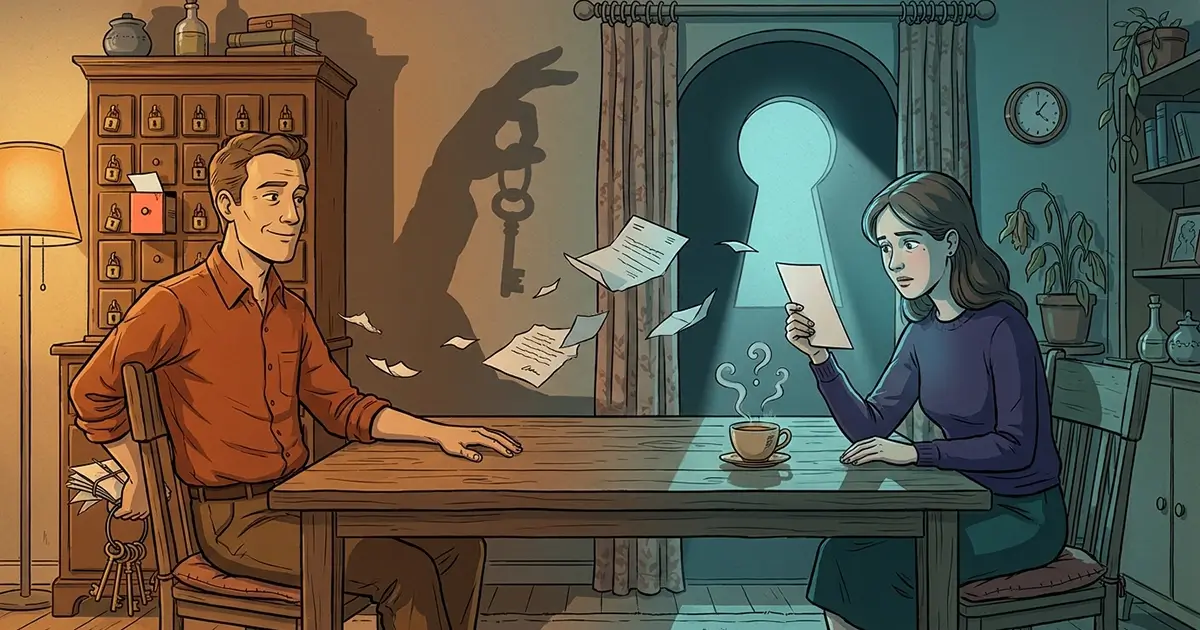
In relationships with inconsistent affection, one partner might be warm and attentive one week, then distant and critical the next. The unpredictability of when love or approval will show up keeps the other partner emotionally invested, sometimes more invested than in a stable, consistently loving relationship.
This dynamic is closely related to trauma bonding, where the highs of intermittent affection create a powerful emotional attachment, even in relationships that are otherwise unhealthy.
People often describe these relationships as feeling more intense than stable ones. That intensity isn't a sign of a deeper connection, it's the anticipation loop doing exactly what it's built to do.
Example 5: Video Game Loot Boxes and Random Drops
Loot boxes use the exact same variable-reward mechanics as slot machines, just dressed up in gaming terms.
You don't know if the next box will contain something rare or something worthless. That uncertainty is precisely what keeps players opening one more, and then another, long after they meant to stop.
Regulators in several countries have started treating loot boxes as a form of gambling for exactly this reason, since the underlying mechanic is nearly identical, just wrapped in a different setting.
Example 6: Sales and Discount Emails
Most promotional emails go straight to the trash. But occasionally, one contains a discount too good to skip.
That occasional big win is enough to keep people opening these emails for months, even though the vast majority offer nothing worth acting on.
Retailers know this. Sending frequent emails with only occasional genuine discounts trains subscribers to keep opening, even when most of what lands in the inbox is forgettable.
Example 7: Job Applications and Freelance Pitches
For freelancers and job seekers, this pattern is painfully familiar.
Most applications go unanswered. But every so often, one gets a reply, an interview, or a client win. That rare payoff is often enough to keep people pitching for far longer than the response rate alone would justify.
This can be a double-edged sword. The persistence it builds is genuinely useful, but it can also make it harder to recognize when a strategy needs to change rather than just repeated harder.
Example 8: Checking Email or Messages Compulsively
Most emails and texts are routine. Nothing exciting, nothing urgent.
But occasionally, one is important, funny, or emotionally significant. That rare exception is enough to keep the habit of constant checking alive, even when most checks turn up nothing.
Many people describe this checking as automatic, almost involuntary. That's a strong sign the behavior is being driven by the reward pattern itself, rather than any real expectation of something urgent waiting.
Example 9: Fishing and Hunting
This is a classic, low-tech example of intermittent reinforcement in action.
You don't catch a fish every time you cast a line. You don't spot game every time you go out. The unpredictability of the reward is actually part of what makes these activities so absorbing for the people who love them.
If every cast guaranteed a catch, the activity would likely feel far less engaging. It's the uncertainty itself, not just the eventual reward, that keeps people coming back trip after trip.
Example 10: Praise From an Unpredictable Boss or Mentor
A manager who praises inconsistently, warm and encouraging one week, critical or distant the next, can create a powerful pull to keep trying to earn their approval.
Employees in this dynamic often work harder to please an inconsistent boss than a consistently supportive one, chasing the unpredictable praise rather than being motivated by stable recognition.
Over time, this can blur the line between genuine motivation and simply trying to avoid the next unpredictable dip in approval, which is a much less sustainable place to work from.
Example 11 (Bonus): Social Media "Doom Scrolling"
Scrolling a feed is its own form of intermittent reinforcement, separate from notifications.
Most posts you scroll past are unremarkable. But every so often, one is genuinely funny, shocking, or relevant to you. That occasional hit keeps the thumb moving, one more scroll, and then another.
How to Recognize Intermittent Reinforcement in Your Own Life
Spotting this pattern in real time is genuinely difficult, since it's designed to feel natural rather than manipulative. A few questions can help:
- Does this behavior pay off unpredictably rather than consistently?
- Do I feel a stronger urge to keep trying after a period of nothing happening?
- Would I still do this if the reward stopped completely?
If the answer to that last question is no, the behavior may be running more on the reward pattern than on genuine value.
FAQs
Is intermittent reinforcement the same as addiction?
Not exactly, but it's a major contributor to many addictive behaviors. Gambling, social media use, and even some relationship patterns can develop addictive qualities specifically because of variable reward schedules.
Why is intermittent reinforcement stronger than constant reinforcement?
Because unpredictability keeps the brain in a state of anticipation. With constant rewards, the brain adapts and the excitement fades. With unpredictable rewards, every attempt carries the possibility of a payoff, which sustains motivation far longer.
Can intermittent reinforcement be used positively?
Yes. Teachers, coaches, and trainers sometimes use variable reinforcement schedules deliberately to build persistence in skill-building, such as praising effort unpredictably rather than after every single attempt. The key difference is intent and the person's wellbeing being genuinely considered.
How do I break a habit formed by intermittent reinforcement?
Awareness is the first step. Recognizing the pattern reduces its power. From there, removing or limiting exposure to the trigger, like turning off notifications or setting boundaries in a relationship, helps interrupt the cycle. In cases involving addiction or unhealthy relationships, professional support can make a significant difference.
Is intermittent reinforcement used intentionally by companies?
Often, yes. Many apps and games are explicitly designed using variable reward principles borrowed from gambling research, since these patterns are known to increase user engagement and time spent on the platform.
Final Thoughts
Intermittent reinforcement isn't inherently bad. It's simply how our brains respond to unpredictability. The problem arises when this pattern is used deliberately, whether by an app, a slot machine, or a person, to keep someone hooked on something that isn't actually serving them.
Once you can name the pattern, it starts to lose some of its grip. That's often the first real step toward making more intentional choices about where your attention and effort go.



Comments (0)
No comments yet. Be the first to share your thoughts!
Leave a comment
Your comment will appear after it's reviewed. Your email is never shown publicly.