
27 Cognitive Dissonance Examples in Everyday Life
From smoking to social media, see 25+ real cognitive dissonance examples explained, plus how to spot dissonance in your own daily choices
 Berry Bits
·
July 10, 2026
·
7 min read
Berry Bits
·
July 10, 2026
·
7 min read
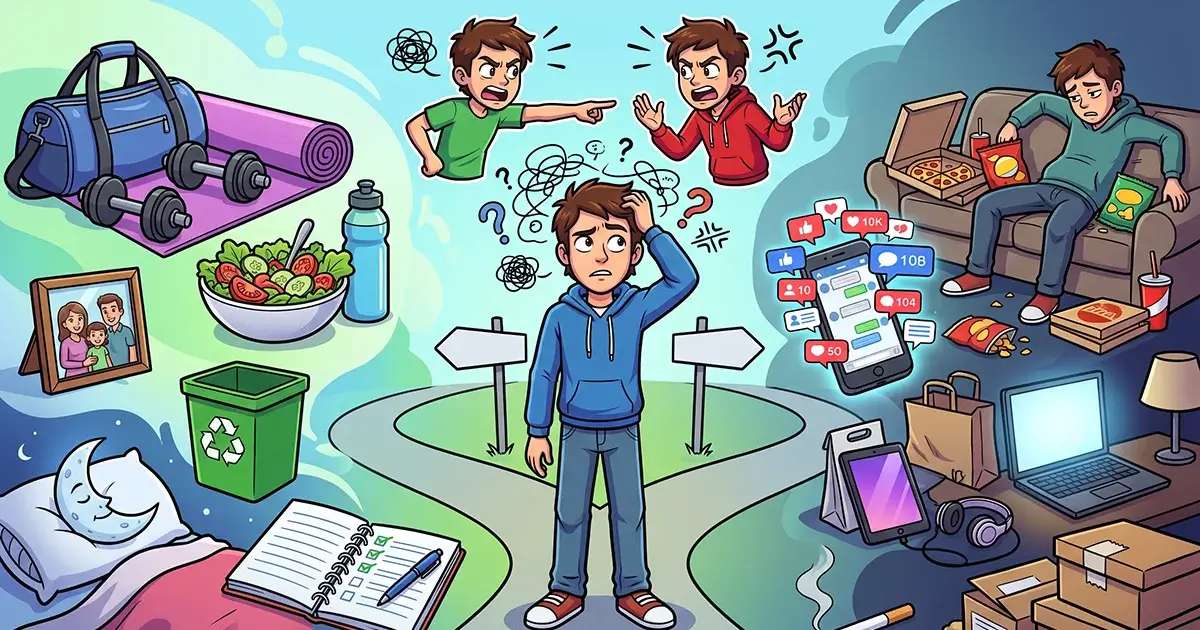
Have you ever made a decision and then spent hours trying to convince yourself it was the right one? Or perhaps you've continued a bad habit while knowing it's harmful? If so, you've experienced Cognitive Dissonance.
Cognitive dissonance is one of the most common psychological experiences people face every day. It influences our decisions, relationships, shopping habits, careers, and even our online behavior.
Understanding cognitive dissonance can help you become more self-aware and make better decisions.
What Is Cognitive Dissonance?
Cognitive dissonance is the mental discomfort we experience when our beliefs, values, or actions contradict one another.
The concept was introduced by psychologist Leon Festinger in 1957. According to his theory, people naturally seek consistency between what they believe and what they do. When inconsistency appears, it creates psychological tension, motivating us to reduce the discomfort.
For example:
- You believe exercise is important.
- You skip the gym for three weeks.
- You start telling yourself, "I don't really need the gym because I'm active enough.
That uncomfortable feeling and the justification that follows are examples of cognitive dissonance.
Why Does Cognitive Dissonance Happen?
Cognitive dissonance usually occurs when:
- Your actions conflict with your values.
- You hold two opposing beliefs.
- New information challenges your existing opinions.
- You make a difficult decision and question whether it was correct.
People often reduce dissonance by:
- Changing their behavior
- Changing their beliefs
- Justifying their actions
- Ignoring conflicting information
Let's look at real-world examples.
27 Cognitive Dissonance Examples in Everyday Life
1. Smoking While Knowing It's Harmful
A smoker knows cigarettes increase the risk of serious illnesses but continues smoking.
To reduce discomfort, they may say:
"My grandfather smoked and lived to 90."
The justification helps reduce the mental conflict between knowledge and behavior.
2. Buying an Expensive Phone You Can't Afford
Someone spends a large portion of their salary on a premium smartphone.
Later, they feel guilty and begin saying:
"I deserve it."
"It's an investment."
"I'll use it for years."
They justify the purchase to reduce buyer's remorse.
3. Staying in a Toxic Relationship
A person knows their partner treats them poorly but stays anyway.
To reduce dissonance, they may think:
"Nobody's perfect."
"Things will change."
"They still love me."
Their beliefs are adjusted to make staying feel reasonable.
4. Skipping Exercise Despite Valuing Health
Many people believe fitness is important but rarely work out.
Instead of changing their habits, they might say:
"I'm too busy."
"I walk enough already."
"Diet matters more than exercise."
5. Eating Junk Food While Trying to Lose Weight
You order a large pizza despite being on a diet.
Immediately afterward, you justify it:
"I'll start again tomorrow."
"One cheat meal won't hurt."
This is a classic example of cognitive dissonance.
6. Procrastinating on Important Work
A student values academic success but spends the evening scrolling social media.
To ease discomfort, they tell themselves:
"I work better under pressure."
The belief protects them from feeling irresponsible.
7. Supporting a Company With Unethical Practices
Someone criticizes exploitative businesses but continues buying from a company accused of unethical behavior.
They justify it by saying:
"Every company does bad things."
"There's no ethical alternative."
8. Staying in a Job You Hate
A person complains daily about their job but never leaves.
To reduce the conflict, they think:
"At least it's stable."
"No job is perfect."
"Things will improve."
9. Spending Too Much Time on Social Media
Many people believe social media harms their productivity and mental health.
Yet they continue spending hours online and tell themselves:
"I'm staying informed."
"I need it for networking."
10. Environmental Concerns but Excessive Consumption
Someone worries about climate change but frequently buys fast fashion and unnecessary products.
They reduce dissonance by saying:
"My choices don't make much difference."
"Everyone else does it too."
11. Staying Up Late Despite Valuing Sleep
A person knows proper sleep is essential but keeps watching videos until 2 a.m.
They rationalize it by saying:
"I need time to relax."
12. Buying a Product and Ignoring Negative Reviews
After purchasing an expensive item, people often avoid reading criticism about it.
Negative information creates dissonance and threatens their belief that they made a good decision.
13. Defending a Political Opinion Despite Contradictory Evidence
People sometimes reject facts that challenge their political beliefs.
Accepting the new information would require admitting they may have been wrong, which creates discomfort.
14. Remaining Loyal to a Sports Team
Fans continue supporting a team despite years of poor performance.
They justify it by saying:
"Next season will be different."
"Real fans never quit."
15. Cheating on a Diet During Holidays
A person committed to healthy eating consumes large amounts of unhealthy food during celebrations.
Later, they think:
"Holidays don't count."
This justification reduces guilt.
16. Staying in an Unproductive Meeting
Employees often remain silent in pointless meetings because everyone else seems engaged.
Internally they think:
"Maybe this meeting is useful."
"I shouldn't question it."
Their beliefs shift to reduce discomfort.
17. Continuing a Subscription You Never Use
Someone pays monthly for a gym or streaming service they rarely use.
Instead of canceling, they say:
"I might need it someday."
"I already invested in it."
18. Working Excessive Hours While Valuing Family Time
A person believes family should come first but consistently works late.
To reduce the contradiction, they tell themselves:
"I'm doing this for my family."
Even if the long hours reduce time with loved ones, the justification eases discomfort.
19. Posting on Social Media for Validation
Someone believes they don't care about other people's opinions.
Yet they repeatedly check likes and comments.
To maintain their self-image, they may say:
"I'm just curious."
"It's part of being online."
20. Remote Workers Logging In While Sick
Remote work has created a modern form of cognitive dissonance.
Employees know they should rest when ill but continue working from home.
They justify it by thinking:
"I'm already at home."
"At least I'm being productive."
21. Ignoring Screen Time Limits
A person sets a daily screen time limit but repeatedly overrides it.
Then they say:
"I had important things to check."
"I only spent a few extra minutes."
22. Keeping Unused Items Because They Were Expensive
Many people hold onto products they never use simply because they paid a lot for them.
Throwing the item away would mean admitting the purchase was a mistake.
23. Parents Allowing More Screen Time Than They Intended
A parent believes children should have limited screen exposure.
After a stressful day, they hand over a tablet and think:
"Educational videos are actually helpful."
The explanation reduces guilt.
24. Staying Friends With Someone Who Has Different Values
A person strongly disagrees with a friend's behavior but keeps the friendship because of history and emotional attachment.
They minimize the conflict by saying:
"They're not always like that."
"Everyone has flaws."
25. Making an Impulse Purchase During a Sale
Someone buys something unnecessary simply because it was discounted.
Later they justify it:
"I saved money."
"I would have bought it eventually."
26. Using Single-Use Plastics While Caring About the Environment
People who care about sustainability may still use disposable products for convenience.
They reduce dissonance by saying:
"I recycle most of the time."
"This one purchase doesn't matter."
27. Remaining in a Career That No Longer Fits
A person realizes they no longer enjoy their profession but continues because they have already invested years into it.
They tell themselves:
"It's too late to change."
"Starting over would be irresponsible."
This allows them to avoid confronting a difficult decision.
Signs You're Experiencing Cognitive Dissonance
You may be dealing with cognitive dissonance if you frequently:
- Feel guilty after making decisions.
- Defend choices that don't make sense.
- Avoid information that challenges your beliefs.
- Make excuses for habits you want to change.
- Feel mentally uncomfortable after acting against your values.
- Overexplain your decisions to yourself or others.
How to Reduce Cognitive Dissonance in a Healthy Way
Cognitive dissonance isn't always bad. In fact, it can motivate positive change. The key is responding to it constructively.
Acknowledge the Conflict
Ask yourself:
"What belief and behavior are contradicting each other?"
Awareness is the first step.
Accept That Everyone Experiences It
Experiencing cognitive dissonance doesn't make you hypocritical or irrational. It's a normal part of human psychology.
Change the Behavior When Possible
If your actions don't match your values, consider changing your behavior rather than creating excuses.
Reevaluate Your Beliefs
Sometimes your old beliefs no longer fit your circumstances. Updating your views can resolve the conflict.
Be Open to New Information
Avoiding contradictory evidence may provide temporary relief, but it often prevents personal growth.
Practice Self-Reflection
Journaling and mindfulness can help identify patterns of rationalization and improve decision-making.
Why Understanding Cognitive Dissonance Matters
Cognitive dissonance affects:
- Spending habits
- Relationships
- Health decisions
- Workplace behavior
- Political beliefs
- Social media use
- Parenting choices
- Career decisions
The more aware you become of these internal conflicts, the easier it is to make decisions that genuinely align with your values.
Final Thoughts
Cognitive dissonance is something nearly everyone experiences. Whether it's staying up too late, defending a bad purchase, remaining in an unfulfilling job, or scrolling social media despite wanting to be more productive, these moments reveal the gap between our beliefs and our behaviors.
Recognizing cognitive dissonance isn't about judging yourself. It's about understanding why you make certain choices and using that awareness to create better alignment between what you believe and how you live.
The next time you catch yourself making an excuse for something that doesn't sit right, pause and ask:
Am I changing my behavior, or simply changing the story I tell myself?




Comments (0)
No comments yet. Be the first to share your thoughts!
Leave a comment
Your comment will appear after it's reviewed. Your email is never shown publicly.