
Fear Conditioning: How Repeated Fear Rewires Your Brain
Learn how fear conditioning works, why repeated exposure to fear-based messages changes behavior, and how to recognize its effects in everyday life.
 Berry Bits
·
June 2, 2026
·
6 min read
Berry Bits
·
June 2, 2026
·
6 min read
Fear Conditioning: How Repeated Fear Rewires Your Brain
Have you ever noticed how hearing the same frightening message repeatedly can change the way you see the world?
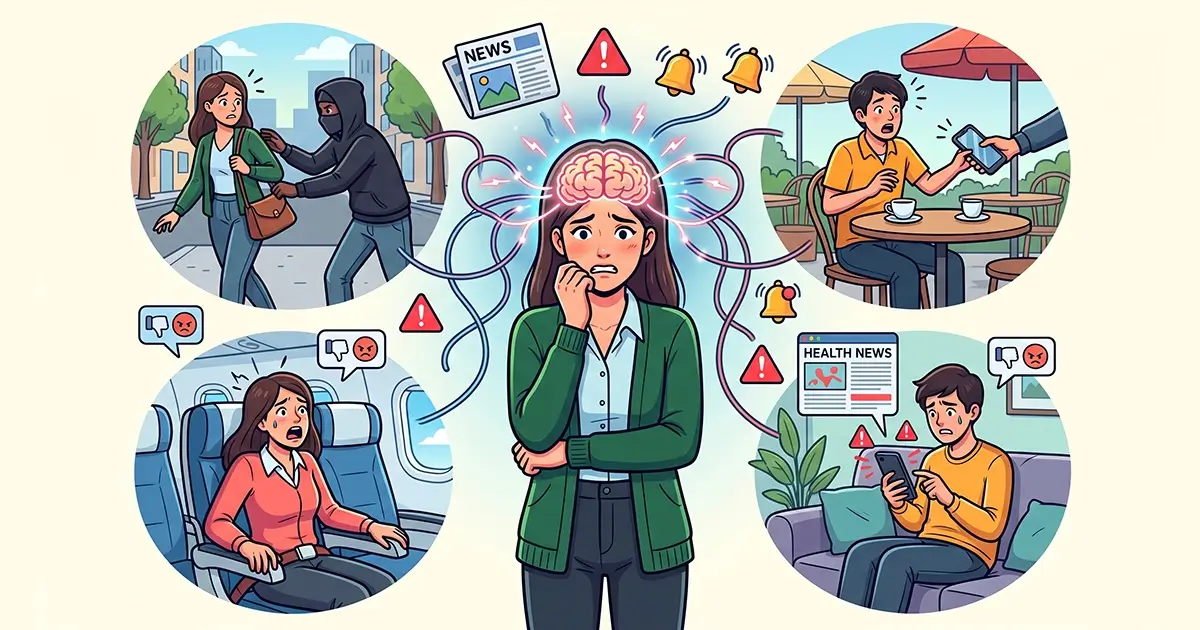
Maybe you've watched several news stories about crime and suddenly started feeling unsafe in places you've visited for years. Perhaps you've seen repeated warnings about scams and become suspicious of every phone call. Or maybe you've spent time on social media and found yourself feeling anxious about problems that rarely affect your daily life.
This phenomenon is often linked to fear conditioning, a psychological process that teaches the brain to associate certain situations, places, or ideas with danger. Over time, repeated exposure to fear-based messages can cause people to react emotionally before they have a chance to think logically.
Understanding fear conditioning can help you recognize when fear is informing you and when it is controlling you.
What Is Fear Conditioning?
Fear conditioning is a learning process in which a person develops a fear response after repeated exposure to a threatening stimulus or message.
The brain is designed to prioritize survival. When something appears dangerous, the brain quickly creates associations to help protect us from future threats. This mechanism is useful when dealing with genuine dangers.
For example, if someone touches a hot stove and gets burned, they learn to avoid touching it again. The fear response helps prevent future injury.
The problem occurs when fear responses are repeatedly triggered by messages, stories, or information that may not represent everyday reality. The brain begins to treat rare events as if they are constantly occurring.
Eventually, people may experience emotional reactions before carefully evaluating facts.
Why Fear Is So Powerful
Fear is one of the strongest emotional motivators in human psychology.
When people encounter threatening information, their attention immediately focuses on it. This tendency helped our ancestors survive dangerous environments where missing a threat could have serious consequences.
Because of this, negative and frightening information often receives more attention than positive information.
News headlines, social media posts, advertisements, and online discussions frequently emphasize danger because fear naturally captures attention.
Repeated exposure strengthens these emotional pathways, making fear responses faster and more automatic.
Example 1: Crime Stories and Feeling Unsafe

Imagine someone sees a news report about a mugging in broad daylight.
The next day they hear about a phone snatching near a café.
A few days later they watch a viral video showing a robbery.
Each event may be real and worth knowing about. However, after repeated exposure, the person may begin believing that danger is everywhere.
They might avoid going outside, become suspicious of strangers, or feel anxious during routine activities.
The actual crime rate may not have changed significantly, but their perception of risk has changed dramatically.
This is a common example of fear conditioning in action.
Example 2: Health Anxiety From Online Content

Consider someone who frequently watches health-related videos online.
One video discusses symptoms of a serious illness.
Another talks about hidden medical conditions.
A third warns viewers not to ignore minor bodily sensations.
After weeks of consuming similar content, the person may start interpreting normal sensations as signs of severe illness.
A harmless headache suddenly feels alarming.
A minor stomach ache becomes a reason for panic.
Repeated fear-based exposure trains the brain to expect danger even when no immediate threat exists.
Example 3: Fear of Flying

Many people become afraid of flying despite statistics showing that commercial aviation is extremely safe.
One reason is repeated exposure to dramatic airplane accident coverage.
Whenever a plane incident occurs, it often receives extensive media attention.
Meanwhile, millions of successful flights happen every year without generating headlines.
As a result, some people overestimate the risk of flying because frightening examples are easier to remember.
Their emotional reaction becomes stronger than their logical assessment of the facts.
Example 4: Social Media and Stranger Danger

Social media platforms frequently highlight unusual or shocking events.
Suppose a person repeatedly watches videos involving scams, confrontations, kidnappings, or suspicious strangers.
Over time, they may begin assuming that most strangers are dangerous.
This can create unnecessary anxiety in public spaces and reduce trust in others.
The person's brain has learned to associate unfamiliar people with potential threats, even though most daily interactions remain safe and uneventful.
Fear conditioning can gradually reshape expectations without the individual realizing it.
How Fear Conditioning Changes Thinking
Fear conditioning affects decision-making in several ways.
First, it increases emotional reactions.
People become more likely to feel anxiety, stress, or worry when exposed to reminders of perceived threats.
Second, it narrows attention.
The brain focuses heavily on potential dangers while ignoring information that suggests safety.
Third, it can distort risk perception.
Rare events begin to feel common because they are repeatedly discussed or displayed.
Finally, it encourages automatic reactions.
Instead of carefully evaluating situations, people respond based on learned fear associations.
Fear Conditioning vs. Being Informed
It's important to understand that fear conditioning does not mean people should ignore genuine risks.
Being informed is valuable.
Learning about crime, health issues, scams, or safety concerns helps people make better decisions.
The difference lies in how information is processed.
Being informed means recognizing risks while maintaining perspective.
Fear conditioning occurs when repeated exposure causes emotional responses to dominate logical thinking.
Awareness helps people prepare.
Fear conditioning can cause people to overestimate threats and underestimate their ability to handle them.
How to Reduce the Effects of Fear Conditioning
One of the best ways to reduce fear conditioning is to diversify information sources.
Avoid consuming the same type of fear-based content repeatedly.
Take time to examine statistics and broader context instead of focusing solely on individual stories.
Ask yourself whether an event is truly common or simply memorable.
Pay attention to how often positive or neutral experiences occur compared to the negative examples you encounter online.
Most importantly, pause before reacting emotionally.
Giving yourself time to evaluate information can help prevent automatic fear responses from taking over.
Frequently Asked Questions
Is fear conditioning always bad?
No. Fear conditioning is a natural survival mechanism. It helps people avoid genuine dangers and learn from negative experiences. Problems arise when fear responses become exaggerated or disconnected from actual risk.
Can social media contribute to fear conditioning?
Yes. Social media algorithms often prioritize emotionally engaging content, including fear-inducing stories. Repeated exposure can strengthen fear-based associations over time.
How can I tell if fear conditioning is affecting me?
Signs may include excessive worry, constantly expecting negative outcomes, feeling anxious about unlikely events, or reacting emotionally before evaluating facts.
Can fear conditioning be reversed?
In many cases, yes. Exposure to balanced information, critical thinking, and conscious evaluation of risks can help reduce conditioned fear responses.
Does fear conditioning cause anxiety?
Fear conditioning does not automatically cause anxiety disorders, but it can contribute to increased anxiety and heightened perceptions of danger.
Final Thoughts
Fear conditioning is a powerful psychological process that shapes how people perceive threats and respond to the world around them. While fear serves an important protective function, repeated exposure to fear-based messages can sometimes lead people to react emotionally before thinking logically.
By understanding how fear conditioning works, you can become more aware of the influences shaping your perceptions. The goal is not to ignore risks or avoid important information. Instead, it is to recognize when fear is helping you stay safe and when it may be distorting your view of reality.
The more aware you are of fear conditioning, the better equipped you become to make decisions based on facts rather than automatic emotional reactions.




Comments (0)
No comments yet. Be the first to share your thoughts!
Leave a comment
Your comment will appear after it's reviewed. Your email is never shown publicly.