
Manufactured Outrage Explained: Why the Internet Overreacts to Nothing
Learn what manufactured outrage is, why it spreads online, and how social media turns small moments into viral anger that doesn’t reflect real life.
 Berry Bits
·
May 23, 2026
·
5 min read
Berry Bits
·
May 23, 2026
·
5 min read
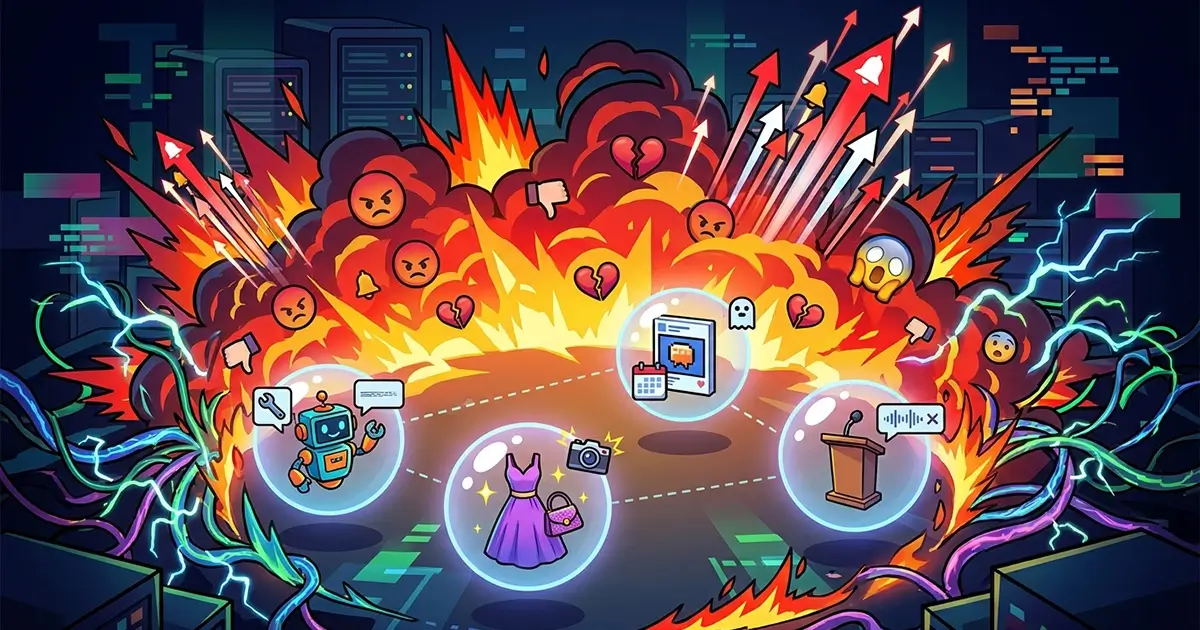
Manufactured Outrage: Why the Internet Turns Small Things Into Big Drama
In today’s digital world, it often feels like nothing stays small for long. A minor comment, a harmless tweet, or even a fictional character’s slight change in personality can suddenly become the center of massive online debate. People get angry, sides form instantly, and what started as something insignificant turns into viral controversy.
This phenomenon is known as manufactured outrage. It refers to situations where small or even meaningless events are amplified online to generate emotional reactions, engagement, and attention. The outrage may feel real, but often the scale of the reaction is not proportional to the importance of the event itself.
To understand it better, we need to look at how it appears in real online behavior.
Example 1: Fictional Character Backlash

One of the clearest examples of manufactured outrage comes from entertainment media. A fictional character in a TV show or game might undergo a minor change in personality, dialogue style, or appearance. Sometimes the change is barely noticeable within the story.
Yet online, this small tweak can trigger a huge reaction. Fans may say the character has been “ruined,” or that the creators have “lost touch,” even though nothing fundamental has changed.
What’s really happening here is not about the character itself. It’s about emotional attachment, identity, and online group behavior. People react strongly because they feel personally invested, and social media amplifies those reactions by rewarding the loudest voices.
The result is a storm of anger built around something that, in isolation, is extremely minor.
Example 2: Celebrity Outfit Controversy

Another common trigger is celebrity culture. A public figure steps out wearing something casual, unusual, or slightly different from expectations. Under normal circumstances, this would pass without much attention.
But online platforms transform it into a talking point. Posts start circulating with exaggerated opinions, memes, and judgments. People begin debating whether the outfit is “appropriate,” “disrespectful,” or “completely unacceptable.”
In reality, the outfit itself has no real-world consequence. It does not affect public policy, economics, or daily life. Yet it becomes a trending topic because outrage content generates clicks and engagement.
This is manufactured outrage in action: a harmless moment turned into a viral debate simply because attention is profitable.
Example 3: Out-of-Context Political Clip

Politics is another space where manufactured outrage thrives. A short clip of a politician speaking is often taken out of context and shared widely. The full speech may have a different meaning, but the clipped version focuses only on a few seconds that appear controversial.
People react immediately, forming strong opinions based on incomplete information. Heated discussions, arguments, and even misinformation spread rapidly before the full context is understood.
This works because short, emotionally charged content travels faster than nuanced explanations. By the time context is added, the outrage has already peaked and moved on.
The result is a cycle where perception is shaped more by fragments than by reality.
Example 4: Old Social Media Posts Resurfacing

Another frequent pattern involves resurfaced posts from the past. A tweet, comment, or statement made years ago by a public figure suddenly reappears, often framed with a dramatic or emotional caption.
People react to it as if it were new information, even though the context may have changed completely or the individual may have already addressed it. The internet quickly divides into defenders and critics, and the discussion escalates.
In many cases, the original post was made in a different time, under different circumstances, and without current awareness. Yet the resurfaced version becomes fuel for renewed outrage.
This is a classic example of how recycled content can generate fresh emotional reactions without adding anything meaningful to present reality.
Why Manufactured Outrage Spreads So Easily
At the core of manufactured outrage is human psychology combined with digital design. Social media platforms are built to prioritize engagement, and emotional content tends to perform better than neutral information.
Anger, surprise, and moral judgment are powerful drivers of attention. When people react strongly, they comment, share, and argue, which increases visibility. This creates a feedback loop where more extreme content gets more reach.
Over time, even trivial events can be framed as important simply because they attract attention.
Another factor is tribal behavior. Online communities often form around shared beliefs or identities. When something appears to challenge those beliefs, people respond emotionally rather than analytically.
The result is not always malicious. Often, it is simply a system where emotional reactions are rewarded more than thoughtful ones.
The Hidden Cost of Constant Outrage
While manufactured outrage may seem harmless on the surface, it has deeper effects. It can distort perception of reality, making it feel like everything is constantly controversial or under attack. It also reduces attention span for nuanced discussion, since simplified emotional narratives dominate the conversation.
Over time, people may become desensitized or fatigued, reacting strongly to minor issues while struggling to engage with more important, complex topics.
This shift affects not only online culture but also how information is processed in everyday life.
Conclusion
Manufactured outrage is not about one specific event or platform. It is a pattern of behavior shaped by psychology, media design, and social interaction. Whether it’s a fictional character tweak, a celebrity outfit, a political clip, or an old tweet, the underlying mechanism is the same: small moments are amplified into large emotional reactions.
Understanding this pattern helps in stepping back from the noise and recognizing when attention is being driven more by engagement than by real importance.


Comments (0)
No comments yet. Be the first to share your thoughts!
Leave a comment
Your comment will appear after it's reviewed. Your email is never shown publicly.