
Phantom Vibration Syndrome Explained: Why You Feel Fake Phone Alerts
Learn what Phantom Vibration Syndrome is, why your brain thinks your phone is vibrating, and real-life examples of this common modern psychology effect.
 Berry Bits
·
June 1, 2026
·
5 min read
Berry Bits
·
June 1, 2026
·
5 min read
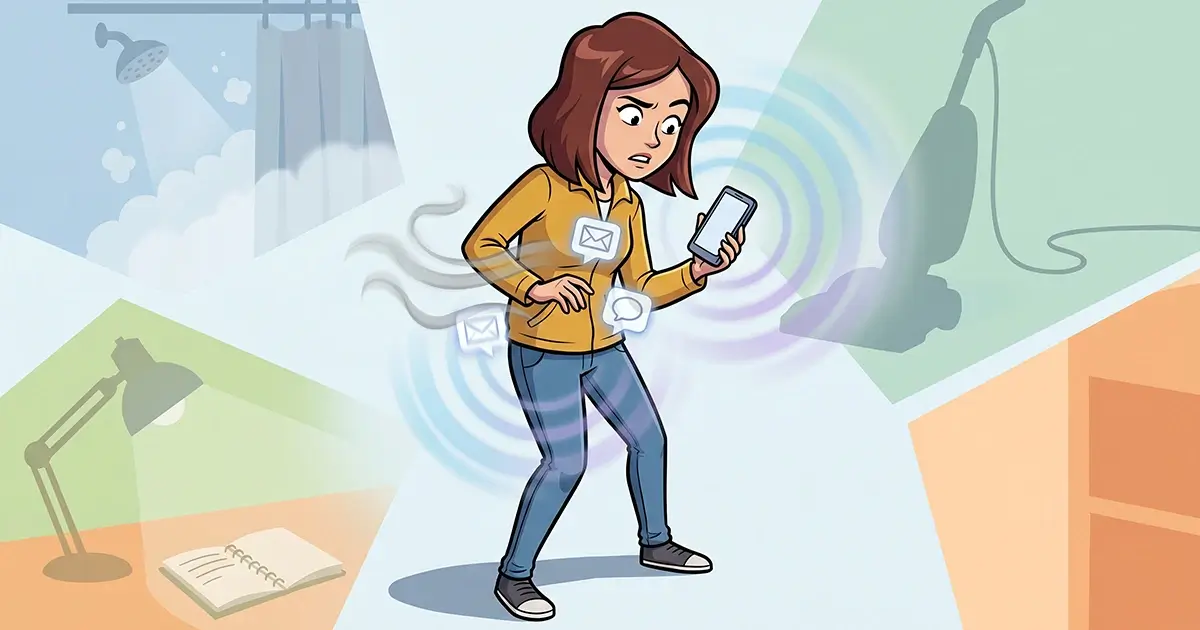
Phantom Vibration Syndrome Explained: Why You Feel Fake Phone Alerts
Ever pulled your phone out of your pocket, fully expecting a notification, only to find nothing there? No call, no message, no vibration. Just silence.
If this has happened to you, you are not alone. This strange experience has a name: Phantom Vibration Syndrome (PVS). It is a modern psychological phenomenon where people feel their phone vibrating or think they hear notifications when none actually occurred.
In a world where smartphones are constantly buzzing with alerts, messages, and app notifications, our brains have started to adapt in unusual ways. Phantom vibrations are one of those adaptations.
What is Phantom Vibration Syndrome?
Phantom Vibration Syndrome is the false perception that your phone is vibrating or ringing when it actually is not.
It is not considered a medical illness, but rather a perceptual or psychological phenomenon linked to brain adaptation, attention, and habit formation.
Your brain becomes so used to checking your phone and responding to notifications that it starts to “predict” them. Over time, it can misinterpret normal sensations like muscle movement, clothing pressure, or environmental noise as a phone alert.
Why Does It Happen?
At the core of Phantom Vibration Syndrome is the brain’s pattern recognition system.
Your brain is constantly trying to make sense of sensory input. When something repeats often enough, like phone vibrations, it becomes a learned pattern. Eventually, the brain starts filling in gaps even when the actual signal is missing.
There are a few key reasons this happens:
Habit formation from frequent phone checking
Hyper-awareness of notifications
Sensory misinterpretation of normal body sensations
Dopamine-driven anticipation of alerts
In simple terms, your brain becomes too good at expecting your phone to go off.
Is It Harmful?
Phantom Vibration Syndrome is generally harmless. It is more of a curiosity about how the brain works in a tech-heavy world.
However, it can sometimes reflect:
High phone dependency
Increased anxiety or alertness
Constant checking behavior
In rare cases, it may be linked to digital overload or stress, especially in people who rely heavily on notifications for work or social communication.
Real-Life Examples of Phantom Vibration Syndrome
To understand it better, here are four common real-world situations where PVS shows up.
Example 1: The Pocket Check That Never Happened

You are walking down the street when you suddenly feel a vibration in your pocket. You stop, pull out your phone, and check.
Nothing.
No notification. No missed call. Just your phone sitting there silently.
This is one of the most common experiences of Phantom Vibration Syndrome. The sensation feels real, but it is actually your brain misinterpreting a minor muscle movement or clothing shift.
Example 2: The Shower Illusion

You are in the shower, water running, mind relaxed. Suddenly, you are sure your phone is ringing or vibrating from the other room.
You rush out, dripping water everywhere, only to find your phone completely silent.
The sound of running water combined with expectation can trick your brain into hearing or feeling a notification that does not exist.
Example 3: The Corner of the Eye Notification

You are sitting at your desk or lying on your bed when you swear you see your phone screen light up.
You pick it up immediately.
Nothing.
This happens because your brain is highly sensitive to visual cues related to notifications. Even slight reflections or light changes can be misread as a screen alert.
Example 4: The Appliance Confusion

You are vacuuming, blow-drying your hair, or using a blender. Suddenly, you feel a strong buzz in your pocket and assume your phone is going off.
After stopping everything and checking, you realize there was no notification at all.
This happens because loud vibrations or repetitive motion from appliances can mimic the feeling of a phone vibration, leading your brain to connect the dots incorrectly.
What This Says About Our Brains
Phantom Vibration Syndrome highlights something fascinating: the brain is not a perfect recorder of reality.
Instead, it is a prediction machine.
It constantly guesses what is happening based on past experiences. When those experiences are heavily influenced by smartphones and notifications, the brain starts predicting phone alerts even when none exist.
This shows how deeply technology can shape perception, attention, and sensory interpretation.
Can You Reduce Phantom Vibrations?
You cannot completely turn off this effect, but you can reduce how often it happens.
Some helpful habits include:
Turning off non-essential notifications
Taking breaks from your phone
Reducing vibration alerts
Avoiding constant phone checking
Creating phone-free time blocks during the day
These steps help reduce your brain’s constant expectation of alerts.
FAQs About Phantom Vibration Syndrome
Is Phantom Vibration Syndrome a real medical condition?
No. It is not a medical disorder. It is a well-known psychological perception phenomenon linked to attention and habit formation.
Why do I feel my phone vibrating when it is not?
Your brain is highly trained to expect notifications. It sometimes misinterprets normal body sensations or environmental noise as a phone vibration.
Is Phantom Vibration Syndrome dangerous?
No, it is harmless. However, it can be a sign of heavy phone use or constant digital engagement.
Who experiences Phantom Vibration Syndrome the most?
People who use smartphones frequently, especially those who receive frequent notifications or work in high-alert digital environments, are more likely to experience it.
Final Thoughts
Phantom Vibration Syndrome is a small but fascinating glimpse into how modern life is changing the way we think and perceive the world.
Your phone becomes so important in daily life that your brain starts imagining it even when it is not there.
It is not a disorder, but a reminder of how deeply connected we are to our devices.
And sometimes, that connection is so strong that we feel it even when it does not exist.




Comments (0)
No comments yet. Be the first to share your thoughts!
Leave a comment
Your comment will appear after it's reviewed. Your email is never shown publicly.