
Inattentional Blindness: Why You Keep Missing What is Right in Front of You
Ever search for keys while they are in your hand? Discover the science of inattentional blindness and why your brain filters out the obvious to keep you focused.
 Berry Bits
·
June 8, 2026
·
8 min read
Berry Bits
·
June 8, 2026
·
8 min read

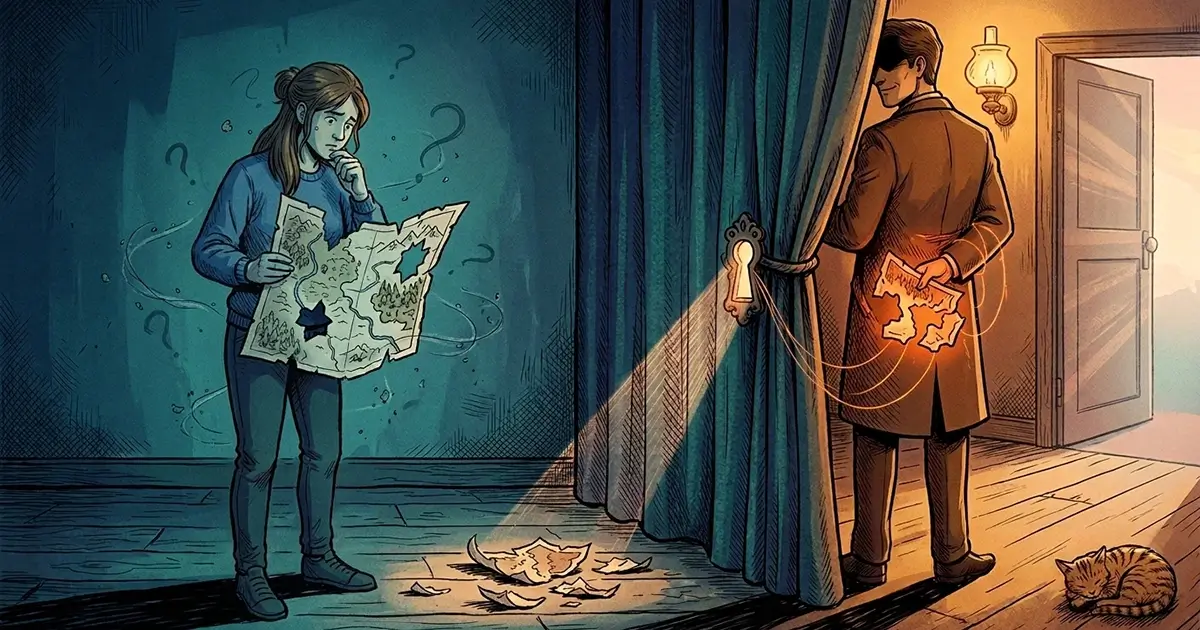
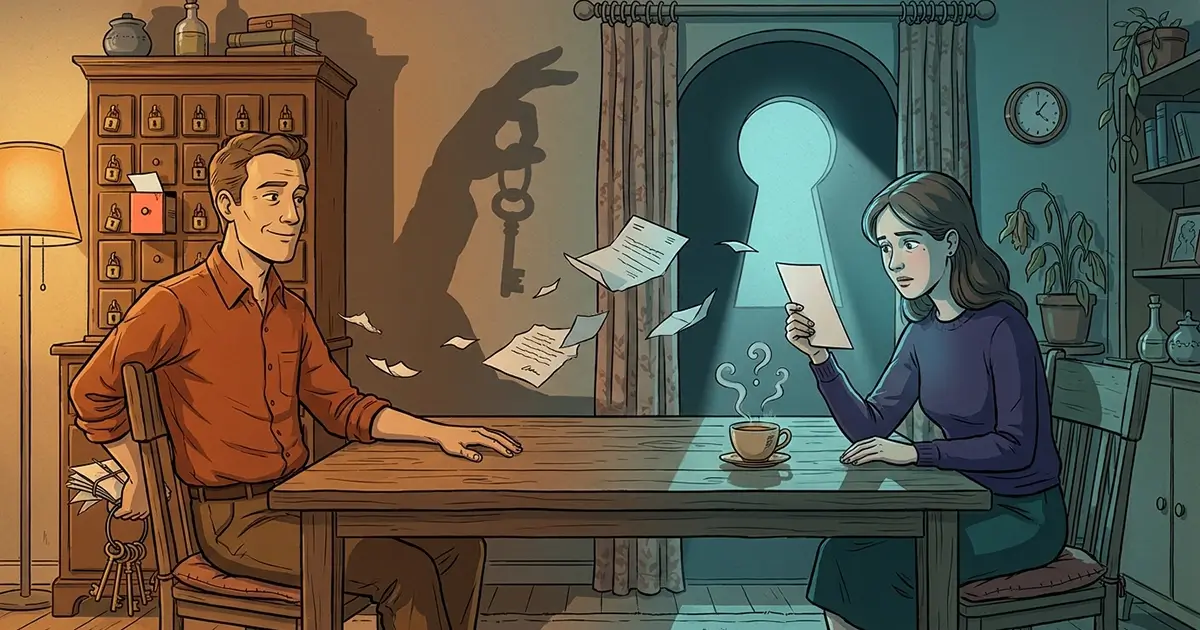
The phenomenon of inattentional blindness is a fascinating quirk of human cognition that explains why we often fail to perceive unexpected stimuli even when they are in plain sight. Simply put, when your brain is deeply occupied with a specific task, it acts like a high-end security filter. It actively blocks out any information it deems irrelevant to your immediate goal.
While this evolutionary trait is designed to keep us efficient and focused, it frequently manifests in our modern lives as frustrating lapses in perception. To understand how this works, we must look at how our brains prioritize data. When we commit to a goal, our neural pathways narrow their focus, creating a tunnel vision effect. This ensures we succeed in our primary task, even if it comes at the expense of noticing other obvious details in the environment.
This is not a sign of poor intelligence; it is a fundamental architecture of how the mind manages the overwhelming influx of sensory input it receives every second of the day. Our brains are essentially prediction machines that decide what is important based on our current intent.
The Science of Cognitive Tunneling
To fully grasp why this happens, we have to look at the limitations of our working memory and attention span. We live in an environment saturated with visual and auditory information. If we tried to process every detail, we would suffer from sensory overload within minutes.
To prevent this, the brain employs selective attention. This mechanism acts as a gatekeeper, allowing only the information that aligns with our current objective to enter our conscious awareness. When you are hyper-focused on a target, your brain creates a "blind spot" for everything else. This process is highly efficient for survival, as it allows us to dedicate our full processing power to one task.
However, this efficiency creates a trade-off. When we narrow our focus, we inadvertently lose our peripheral awareness. The more intense the focus, the more dramatic the blindness becomes. This is a consistent trait across all human beings, regardless of their background or expertise.
Example 1: The Invisible Gorilla Experiment

One of the most famous examples of this is the "Invisible Gorilla" experiment conducted by Christopher Chabris and Daniel Simons. In this study, participants were asked to watch a video and count the number of passes made by a basketball team wearing white shirts. While they were intently focused on counting, a person dressed in a gorilla suit walked through the center of the court.
The person in the suit paused to beat their chest and then walked off. Remarkably, about half of the participants completely failed to notice the gorilla. Their brains were so preoccupied with the task of counting passes that they essentially rendered the gorilla invisible. This proves that attention is a limited resource. When we allocate our full attention to a specific task, we genuinely do not "see" what is happening around us.
Example 2: Expert Radiology Blind Spots

Another frequent example occurs in professional contexts, such as medical imaging. In a study involving lung cancer screening, researchers asked experienced radiologists to look for nodules on a series of CT scans. In the final scan, they inserted a tiny image of a gorilla—about the size of a matchbox—directly into the lung tissue.
Despite the fact that these experts spent their entire careers looking at these types of scans, 83 percent of them failed to notice the anomaly. The professional focus required to identify medical issues was so intense that it overrode their ability to see an out-of-place stimulus. This highlights that even experts with thousands of hours of training are not immune to these filtering mechanisms. It serves as a humbling reminder that expertise does not override biological constraints.
Example 3: The "Looked-But-Failed-To-See" Phenomenon

A third example is found in everyday driving. Many drivers have experienced the phenomenon of looking directly at a motorcycle and yet not "seeing" it, leading to accidents. This is often referred to as "looked-but-failed-to-see" incidents.
Drivers are scanning the road for large objects like cars or trucks. If their brain is calibrated to detect those specific shapes, it may filter out the smaller profile of a motorcycle. The driver is physically looking at the road, but the brain is not registering the bike because it does not match the template of the target objects they are currently searching for. This is a life-critical example of how our internal filters can lead to dangerous consequences when they prioritize efficiency over comprehensive awareness. It demonstrates that vision is not a passive process of recording; it is an active process of selection.
Example 4: The Kitchen Search Struggle

Finally, consider the frustration of searching for an item in your kitchen, such as your glasses or a specific spice. You scan the counter repeatedly, yet come up empty, only to have someone else walk in and grab it instantly from the very spot you just checked.
This happens because your brain is currently stuck in a cycle of frustrated searching. Because you have convinced yourself that the item is hidden or lost, your brain adjusts your perception to match that expectation, causing you to overlook the object even when it is in your direct line of sight. By understanding that this is a cognitive filter rather than a personal failure, you can learn to pause, reset your objective, and allow your brain to recalibrate. When you take a breath and intentionally broaden your focus, you are effectively breaking the tunnel vision cycle and allowing your brain to process the visual field more holistically.
Why We Should Embrace the Pause
The awareness of inattentional blindness should change how we approach our daily tasks. When we feel overwhelmed or stuck, it is often because we are locked in a specific mode of focus that is no longer serving us.
By consciously choosing to step back, we allow our brains to shift from "target mode" to "ambient mode." This shift is crucial for problem-solving and creativity. It allows us to notice the details we were previously filtering out. It is also a powerful lesson in humility; realizing that our perception is limited helps us be more forgiving of our mistakes and more understanding of others who may be suffering from the same cognitive tunnel vision.
Navigating Life with Better Awareness
How can we use this information to improve our daily performance? First, recognize the signs of cognitive fatigue. If you are struggling to find something or make sense of a situation, stop the search. If you continue to force your brain to look for the same thing in the same way, you will only reinforce the blindness.
Instead, introduce a "pattern break." Look away, change your physical environment, or engage in a brief, unrelated activity. This disrupts the neural loop and forces the brain to reset its focus. When you return to the task, your brain is refreshed and ready to scan the environment with a new template, making the hidden item or solution suddenly visible.
Furthermore, teach yourself to perform "wide-angle" checks. In driving or complex work, periodically remind yourself to look for the "unexpected" rather than just the "expected." While you cannot account for everything, the mere act of anticipating the unknown can help widen your attentional gate.
Conclusion
Inattentional blindness is a testament to the fact that the mind is not a camera. We do not simply record the world; we construct our reality based on what we deem important. Understanding this process does not make us less intelligent, but it does make us more aware of our limitations.
By acknowledging the existence of these internal filters, we can navigate life with more patience and better perception. Whether you are searching for your keys, analyzing medical scans, or navigating traffic, remembering that your brain might be filtering out the truth is the first step toward seeing the world more clearly.
Frequently Asked Questions
What is the main cause of inattentional blindness?
The main cause is the brain's limited attentional capacity. We cannot process every piece of information in our environment, so we filter out what we perceive as irrelevant to our current task to maintain efficiency.
Can you overcome inattentional blindness?
While you cannot turn off your brain's filtering mechanism entirely, you can become more aware of it. Taking a moment to pause, breathe, and consciously "zoom out" when you are frustrated can help you see things you might have otherwise missed.
Is inattentional blindness the same as being distracted?
No. Being distracted usually means your attention has shifted to something else entirely. Inattentional blindness occurs when your attention is fully invested in a primary task, causing you to filter out stimuli that are not part of that task.
Does this happen to everyone?
Yes, it is a universal aspect of human neurobiology regardless of age, intelligence, or professional background. Even high-level experts are susceptible to it when their focus is narrowed.
How can I stop missing the obvious in my daily life?
The best strategy is to introduce a "pattern break" when you are stuck. By stepping away from the task or changing your perspective, you force your brain to reset, which often reveals the information you were previously filtering out.


Comments (0)
No comments yet. Be the first to share your thoughts!
Leave a comment
Your comment will appear after it's reviewed. Your email is never shown publicly.