
Intermittent Reinforcement: The Complete Guide
Everything you need to know about intermittent reinforcement — the psychology, the science, and why unpredictable rewards are so addictive.
 Berry Bits
·
July 20, 2026
·
6 min read
Berry Bits
·
July 20, 2026
·
6 min read
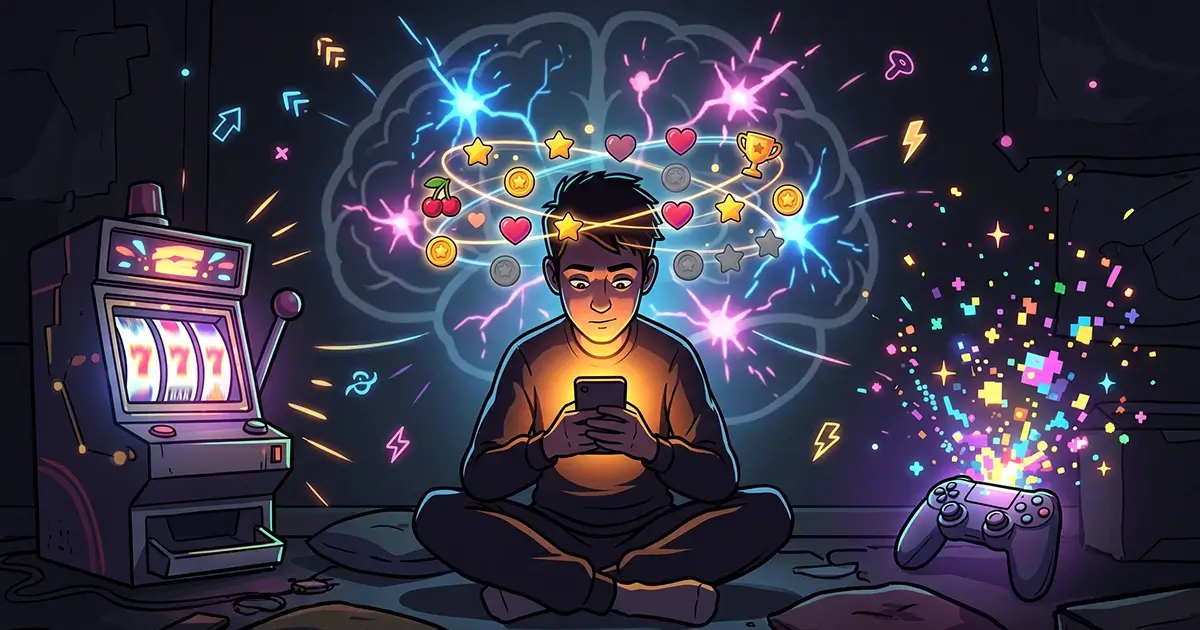
Why do you check your phone one more time, even when nothing new is usually there? Why does a slot machine feel more compelling than a vending machine, even though both just dispense things? The answer lies in one of the most powerful mechanisms in behavioral psychology: intermittent reinforcement.
Unlike constant rewards, which we quickly get used to, unpredictable rewards keep us hooked. Understanding how this works — and where it shows up in daily life — can help you recognize it, resist it, and in some cases, use it responsibly.
What Is Intermittent Reinforcement?
Intermittent reinforcement is a behavioral principle where a reward is given only some of the time a behavior occurs, rather than every time. The unpredictability is the key ingredient.
Psychologist B.F. Skinner first identified this through operant conditioning experiments with animals. He found that behaviors reinforced unpredictably were far more resistant to extinction than behaviors reinforced every single time.
In simple terms: if you never know when the reward is coming, you keep trying longer and harder to get it.
3 Sides of Intermittent Reinforcement: Examples, Psychology & Relationships
The Science Behind Why It Works
Our brains are wired to chase uncertainty. When a reward is guaranteed, dopamine spikes at the reward itself. But when a reward is uncertain, dopamine spikes at the anticipation of it.
This is why gambling, social media, and even certain relationships can feel so magnetic. The brain isn't rewarding the outcome — it's rewarding the chase.
Researchers call this a variable ratio reinforcement schedule, and it produces the highest, most consistent rates of behavior repetition of any reinforcement pattern studied.
Fixed vs. Variable Reinforcement Schedules
Not all reinforcement is created equal. There are two broad categories:
- Fixed reinforcement: A reward comes after a set number of actions or a set amount of time (e.g., a paycheck every two weeks).
- Variable reinforcement: A reward comes after an unpredictable number of actions or amount of time (e.g., a like on a random post).
Fixed schedules feel stable but lose their pull once the pattern is learned. Variable schedules never lose their pull, because the pattern never fully reveals itself.
Example 1: Social Media Notifications

Every time you post something online, you don't know if it will get five likes or five hundred. That uncertainty is exactly what keeps people refreshing their feeds.
Apps are deliberately designed around this principle. Notifications, likes, and comments arrive at unpredictable intervals, which mirrors the exact structure of a slot machine payout.
This is one of the most-cited real-world examples of intermittent reinforcement because it affects billions of people daily, often without their awareness.
Example 2: Slot Machines and Gambling

Gambling is the textbook case. A slot machine doesn't pay out every time you pull the lever — it pays out occasionally, and randomly.
This randomness is precisely why gambling is so hard to walk away from. Near-misses (almost winning) actually increase the urge to keep playing, even though a near-miss is still a loss.
Casinos design games specifically around variable ratio schedules because they know it produces the longest playing sessions and the highest resistance to quitting.
Example 3: Relationships With Inconsistent Affection

Intermittent reinforcement also shows up in human relationships, particularly ones involving inconsistent affection or attention.
When a partner is warm and loving one day, then distant or dismissive the next, the unpredictability can create a stronger emotional attachment than consistent affection would. This is sometimes referred to as a "trauma bond" in unhealthy relationship dynamics.
The person on the receiving end often works harder to "earn back" the affection, mistaking the anxiety of uncertainty for the intensity of love.
Example 4: Video Game Loot Boxes

Loot boxes and random reward drops in video games are a modern, deliberately engineered example of intermittent reinforcement.
A player doesn't know exactly when a rare item will drop. That uncertainty keeps them playing — and in many cases, keeps them spending money — far longer than a predictable reward system would.
This mechanic has drawn regulatory scrutiny in several countries precisely because it mirrors gambling mechanics so closely, especially when minors are involved.
Why Intermittent Reinforcement Is So Hard to Break
Once a behavior is locked into a variable reward pattern, it becomes remarkably resistant to change. Even long periods without a reward don't necessarily stop the behavior — because the brain has learned that a reward could come at any moment.
This is why habits built on intermittent reinforcement (checking a phone, playing a game, waiting on a text back) are often harder to quit than habits built on consistent, predictable rewards.
How to Recognize It in Your Own Life
A few signs intermittent reinforcement may be influencing your behavior:
- You check something repeatedly "just in case," even without a specific reason.
- You feel more anxious about inconsistency than upset about absence.
- You find yourself unable to predict when you'll feel satisfied, only that you might.
- Stopping the behavior feels harder than the behavior itself seems to justify.
Recognizing the pattern is the first step toward loosening its grip.
Using Intermittent Reinforcement Responsibly
Not every use of intermittent reinforcement is manipulative. Teachers, coaches, and parents sometimes use unpredictable praise or rewards to encourage effort rather than outcome-chasing.
The ethical line usually comes down to intent and transparency. Used to build genuine motivation, it can be a helpful tool. Used to exploit attention or spending, it becomes manipulative design.
FAQs
What is an example of intermittent reinforcement in everyday life?
Checking social media for likes or notifications is one of the most common examples, since rewards arrive unpredictably rather than every time.
Is intermittent reinforcement the same as a variable ratio schedule?
They're closely related. Intermittent reinforcement is the broader concept, while a variable ratio schedule is a specific type of intermittent reinforcement based on an unpredictable number of responses.
Why is intermittent reinforcement so addictive?
Because the brain releases dopamine in anticipation of an uncertain reward, not just at the reward itself. This keeps the behavior going even during long stretches without payoff.
Can intermittent reinforcement happen in relationships?
Yes. Inconsistent affection or attention from a partner can create strong emotional attachment, sometimes described as a trauma bond, because the uncertainty keeps the other person seeking approval.
How do you break a habit formed by intermittent reinforcement?
Awareness is the first step. Recognizing the pattern, setting deliberate limits, and removing yourself from the unpredictable trigger (such as muting notifications) can weaken the habit over time.
Final Thoughts
Intermittent reinforcement isn't inherently good or bad — it's simply one of the most powerful tools the brain responds to. What matters is whether it's being used to build genuine habits and motivation, or to quietly exploit attention, money, or emotional investment.
Once you can spot the pattern — in an app, a game, or a relationship — you take back a measure of control. The uncertainty stops working on you unconsciously, and starts becoming something you can name, question, and choose to walk away from.




Comments (0)
No comments yet. Be the first to share your thoughts!
Leave a comment
Your comment will appear after it's reviewed. Your email is never shown publicly.