
25 Gaslighting Phrases and What They Really Mean
25 common gaslighting phrases decoded, what they mean, why they work, and how to respond when someone tries to rewrite your reality.
 Berry Bits
·
July 21, 2026
·
8 min read
Berry Bits
·
July 21, 2026
·
8 min read

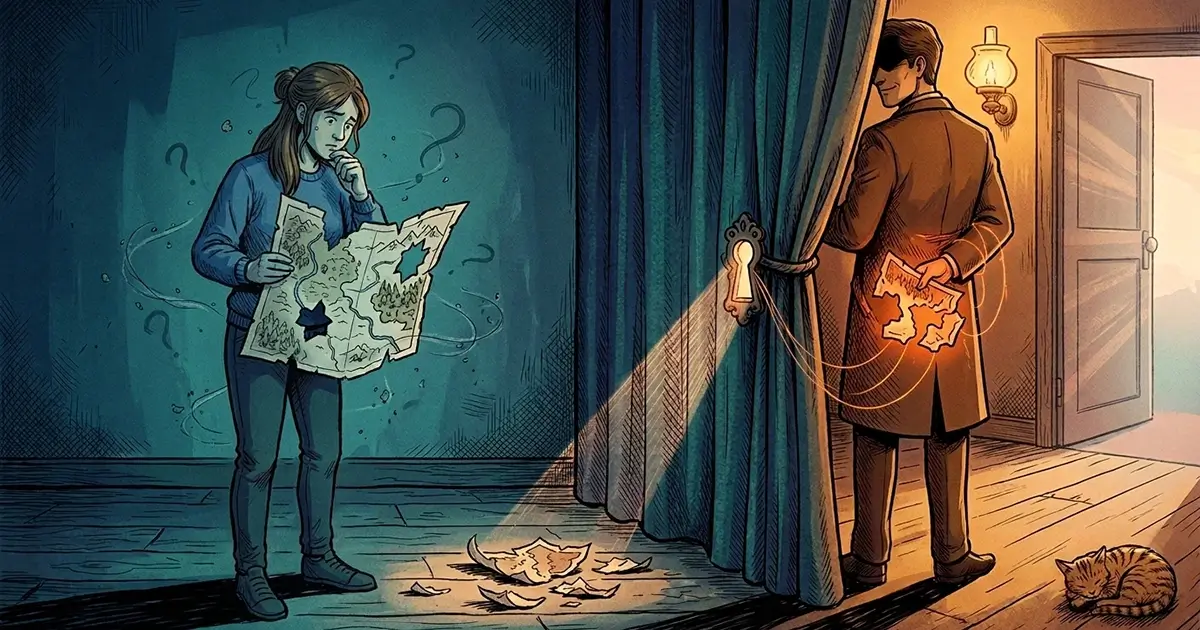
Gaslighting rarely announces itself. It hides inside ordinary-sounding sentences — the kind said in a calm voice, sometimes even with a smile. That's what makes it so effective. By the time you notice the pattern, you've already started doubting your own memory.
This post breaks down 25 of the most common gaslighting phrases, what they actually mean underneath the words, why they work on the brain, and how you can respond without getting pulled into the trap.
What Gaslighting Actually Sounds Like
Gaslighting is a manipulation tactic where someone systematically denies, twists, or minimizes your experience so you start questioning your own perception of reality. It's not always dramatic. Most of the time it's small, repeated phrases that chip away at your confidence in what you saw, heard, or felt.
The phrases below fall into five categories: denial, blame-shifting, minimizing, reality distortion, and character attacks. Each one is a tool doing a specific job.
Denial Phrases
These phrases flatly reject that something happened, even when you were there.
1. "That never happened." What it means: Your memory is being overwritten in real time. The gaslighter isn't debating the event — they're erasing it.
2. "I never said that." What it means: A direct contradiction of something you clearly heard. Said often enough, it trains you to doubt your own ears.
3. "You're remembering it wrong." What it means: A softer version of denial. It sounds reasonable, which makes it more disorienting than a flat "no."
4. "I don't know what you're talking about." What it means: Feigned confusion used to stall the conversation and make you feel like the confused one.
5. "You must be confused." What it means: Reframes your clarity as a symptom. It quietly suggests something is wrong with you, not them.
Blame-Shifting Phrases
These redirect responsibility for the gaslighter's behavior back onto you.
6. "You're the one who's overreacting." What it means: Your reaction becomes the problem instead of whatever triggered it.
7. "Look what you made me do." What it means: Removes the gaslighter's agency entirely and hands you the consequences of their choice.
8. "If you hadn't done X, I wouldn't have done Y." What it means: A conditional excuse that makes your behavior the root cause of theirs.
9. "I only did that because you pushed me." What it means: Same tactic, framed as self-defense. It positions them as reactive rather than responsible.
10. "You always do this to me." What it means: A generalized accusation that shifts focus from the specific incident to a manufactured pattern of your "wrongdoing."
Minimizing Phrases
These shrink your experience down until it seems too small to matter.
11. "You're too sensitive." What it means: Your emotional response is recast as the actual issue, not the thing that caused it.
12. "It was just a joke." What it means: Removes intent from something that clearly landed as hurtful, and puts the burden on you for "not getting it."
13. "You're making a big deal out of nothing." What it means: Dismisses the legitimacy of your concern before it can even be discussed.
14. "Other people have it way worse." What it means: Uses comparison to invalidate your feelings, as if pain only counts past a certain threshold.
15. "I was just being honest." What it means: Repackages cruelty as virtue, making you feel unreasonable for objecting to how it was delivered.
Reality-Distorting Phrases
These are designed to make you question your own perception directly.
16. "You're imagining things." What it means: A direct challenge to your senses, not just your memory.
17. "No one else thinks that." What it means: Implies a manufactured consensus against you, even without evidence anyone else was consulted.
18. "You're crazy." What it means: The most blunt reality-distorting phrase. It's meant to end the conversation by discrediting you entirely.
19. "I was just testing you." What it means: Reframes deception as a game, which makes calling it out feel like you're the one who failed to play along.
20. "You're twisting my words." What it means: Often used preemptively, before you've even finished explaining what they said — a way of getting ahead of accountability.
Character-Attack Phrases
These shift the conversation from the behavior to who you are as a person.
21. "You're being paranoid." What it means: Pathologizes suspicion that may be entirely justified.
22. "You always have to make everything about you." What it means: Punishes you for raising a concern by framing it as self-centered.
23. "Nobody would believe you anyway." What it means: A pre-emptive strike meant to isolate you before you can seek outside perspective.
24. "I'm the only one who really understands you." What it means: Positions the gaslighter as your sole source of validation, making you more dependent on their version of events.
25. "You're lucky I put up with you." What it means: Reframes the relationship itself as a favor, so you stay grateful instead of critical.
4 Real-World Examples
Example 1: The Workplace

A manager tells an employee, "I never said the deadline was Friday," despite an email trail proving otherwise. The employee starts double-checking every future instruction in writing — which is exactly the doubt the manager wanted to create.
Example 2: The Relationship

A partner says, "You're too sensitive, I was just joking," after a comment that clearly stung. Over months, the receiving partner stops voicing hurt at all, assuming they're the problem.
Example 3: The Family

A parent insists, "That never happened, you're remembering your childhood wrong," when an adult child brings up a specific memory. The child begins to distrust their own recollections more broadly, not just this one.
Example 4: The Friendship

A friend says, "No one else thinks you're a good friend, I'm just being honest," to guilt someone into staying close despite mistreatment. The isolation this creates makes the phrase harder to challenge, since there's no one else to check it against.
How to Respond to Gaslighting Phrases
You don't need to win the argument. You need to hold onto your own perception. A few approaches that work:
- Name it internally first. Recognizing "this is a gaslighting phrase" — even silently — interrupts its effect.
- Keep a record. Texts, emails, or a private note with dates. External proof counters the erosion of memory.
- Use flat, factual language. "I remember it differently" holds your ground without escalating into a debate you can't win in the moment.
- Involve a third party when possible. Isolation is what lets these phrases work; outside perspective breaks that.
- Exit the conversation if it loops. Gaslighters often repeat the same phrase until you concede out of exhaustion. Leaving the loop protects you more than "winning" it.
FAQs
Q: Is gaslighting always intentional?
Not always. Some people gaslight without a conscious plan, often repeating patterns they learned or absorbed elsewhere. That doesn't make the impact on you any less real, but it can shape how you choose to respond.
Q: Can gaslighting happen at work, not just in relationships?
Yes. Workplace gaslighting is common — around deadlines, credit for work, or promises made and later denied. The tactics are the same ones used in personal relationships, just dressed in professional language.
Q: What's the difference between gaslighting and a genuine misunderstanding?
A misunderstanding is usually a one-off and gets resolved once clarified. Gaslighting is a repeated pattern that persists even after clear evidence is presented, and it specifically targets your confidence in your own perception.
Q: How do I know if I'm being gaslit or just being overly sensitive?
If you consistently doubt your own memory after conversations with a specific person, and if others seem to describe a totally different, more agreeable version of that person, that pattern is worth paying attention to. Genuine sensitivity doesn't usually come with a growing sense that your own mind can't be trusted.
Q: Can gaslighting be reversed once you recognize it?
Recognizing it is the first and most important step. Once you can name the phrases as tactics rather than truths, they lose a lot of their power — even if the person doesn't change.
Conclusion
Gaslighting works because it's quiet, repeated, and delivered in language that sounds almost reasonable in the moment. None of these 25 phrases look alarming on their own — that's the point. It's the pattern, not the single sentence, that does the damage.
The fastest way to take the power out of a phrase like "you're too sensitive" or "that never happened" is to recognize it for what it is: a tactic, not a fact. You don't have to win the exchange or convince the other person they're wrong. You just have to keep trusting what you saw, heard, and felt — and lean on outside perspective, records, and distance when that trust starts to slip.
Once you can name these phrases, they stop working the same way. That recognition is the real defense.



Comments (0)
No comments yet. Be the first to share your thoughts!
Leave a comment
Your comment will appear after it's reviewed. Your email is never shown publicly.