
Information Withholding: The Psychology of Silent Control
Information withholding is a subtle manipulation tactic. This guide breaks down why people do it, how to spot it, and how to respond.
 Berry Bits
·
October 19, 2026
·
10 min read
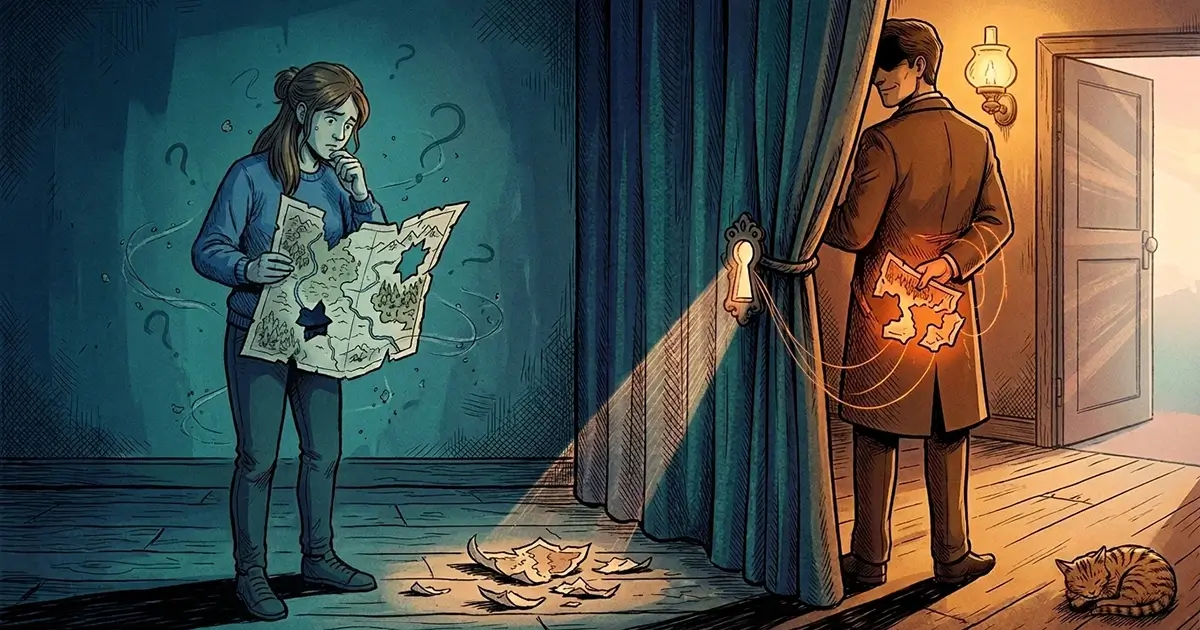
Not every act of control is loud. Some of the most effective forms of manipulation involve no arguments, no threats and no obvious lies. They involve silence. When someone decides what you get to know, and when, they hold a quiet kind of power over your choices, your confidence and your sense of reality.
This guide explains what information withholding is, why people use it, how to recognize it, and what you can do about it.
Here are 3 articles that go deeper on this topic:
- Is Withholding Information the Same as Lying? What Psychology Says
- 7 Signs Someone is Withholding Information to Control You
- 6 Signs a Co-Parent Is Withholding Information About Your Child
What is Information Withholding?
Information withholding is the deliberate choice to keep relevant facts from someone who needs or deserves to know them. The key word is deliberate. Forgetting to mention something is human. Deciding, on purpose, to leave someone uninformed so that you benefit is something else entirely.
Psychologists often describe this as an asymmetry of information. One person has the full picture, the other has a partial one, and the gap is maintained on purpose. Because the withholder can always say, “You never asked,” the behavior is easy to deny and hard to prove. That deniability is exactly what makes it so appealing to people who want control without confrontation.
Why Information Is Power
Think about any decision you make: where to work, whom to trust, how to spend your money, when to leave a situation. Every one of those choices depends on the information you have. Control the information, and you quietly steer the decision.
This is why information withholding shows up wherever power is uneven. It appears in offices, marriages, families and friendships. The person withholding doesn’t need to force anything. They only need to make sure you never have the facts that would lead you to a different conclusion.
Why Do People Withhold Information?
Not everyone who withholds information is a calculating manipulator. Understanding the motives helps you respond more wisely.
- To gain or keep power. When knowledge is currency, hoarding it feels like safety. Some people withhold simply because sharing would reduce their leverage.
- To avoid conflict or consequences. Many people stay silent because they fear someone’s reaction, not because they want to control anyone. This is avoidance, though it can still do real damage.
- To protect their image. Hiding a mistake, a debt or a failure can feel easier than facing the shame of admitting it.
- To shape the story. Selective sharing lets someone control how they are seen. They reveal the flattering facts and bury the rest.
- To punish. Sometimes silence is a weapon. Refusing to share information is a way to make another person feel small, anxious or dependent.
The motive matters, but the impact often looks the same: the person on the receiving end is left confused, uncertain and unable to make fully informed choices.
Withholding vs. Lying: Where Is the Line?
Many people feel guilty questioning someone who “never actually lied.” But the absence of a false statement doesn’t mean the absence of deception. Psychologists distinguish between lies of commission (saying something false) and lies of omission (leaving out something true that creates a false impression).
The line is crossed when the omission is intentional, the information is relevant to your decisions, and the silence benefits the person withholding. If you want a deeper look at how psychology draws this distinction, our breakdown of whether withholding information is the same as lying walks through it step by step.
4 Real-Life Examples of Information Withholding
Concrete situations make this pattern easier to spot. Here are four examples from different areas of life.
Example 1: The Manager Who Controls the Map

Daniel’s manager never shares upcoming changes to the team structure, budget decisions or promotion criteria. Meetings end with vague updates, and the real information arrives only after decisions are final. When Daniel asks questions, he’s told, “That’s not something you need to worry about.”
The result is that Daniel can’t prepare, negotiate or advocate for himself. His manager never lied, but by controlling the flow of information, she keeps him dependent on her goodwill and unable to compete for opportunities.
Example 2: The Husband and the Hidden Finances

Sara and Imran have been married for six years. Imran handles all the finances “to keep things simple.” Sara has never seen the full picture of their savings, debts or investments. When she asks, he says, “Everything’s fine, don’t stress.”
Years later, Sara learns about a large loan Imran took out without telling her. He never lied outright. He simply decided that she didn’t need to know. The damage goes beyond the money. Sara now questions whether she has ever had an honest picture of her own life.
Example 3: The Co-Parent Who Controls the Child’s World

After a separation, Hira’s former husband stops sharing details about their son’s school events, medical appointments and daily routines. Hira finds out about a parent-teacher meeting only after it has happened. Each time she asks, she’s told it “slipped his mind.”
Over months, a pattern emerges: Hira is being pushed to the edges of her own child’s life. If this feels familiar, these 6 signs a co-parent is withholding information about your child can help you tell the difference between honest forgetfulness and deliberate exclusion.
Example 4: The Sibling Who Manages the Family Business

Three siblings inherit a small family shop. The eldest, Kamran, handles the accounts and supplier relationships. He shares only the numbers that look good and brushes off questions with, “I’m handling it.” His younger brother and sister gradually realize they can’t answer basic questions about profits, debts or contracts.
Kamran’s silence isn’t dramatic, but it gives him complete control over decisions the family should be making together.
How to Spot Information Withholding
The tricky part about this behavior is that it hides in ordinary moments. Still, certain patterns tend to repeat:
- Important facts reach you late, or only after decisions are made.
- Your direct questions get vague, deflecting or irritated answers.
- You often learn things from third parties instead of from the person involved.
- You’re told you “don’t need to worry about it” or that you’d “overreact.”
- Your own understanding of events keeps being undermined or corrected.
No single sign proves anything. But a repeated pattern, especially when it consistently benefits one person, deserves your attention. For a more detailed checklist, see our guide to the 7 signs someone is withholding information to control you.
The Psychological Impact on the Person Left in the Dark
Being kept uninformed is more damaging than it first appears. Over time, people on the receiving end often experience:
Self-doubt. When your picture of reality keeps turning out incomplete, you start to question your own judgment instead of questioning the person withholding.
Anxiety and hypervigilance. You begin scanning for clues, double-checking details and bracing for the next surprise.
Learned dependence. If someone else always “handles” the information, you slowly lose the habit, and sometimes the confidence, to handle it yourself.
Erosion of trust. Once you discover what was withheld, you often wonder what else you haven’t been told. That uncertainty can linger long after the original issue is resolved.
How to Respond to Information Withholding
You can’t control another person’s behavior, but you can control how you respond. These steps help you stay grounded.
- Name the pattern, not the person. Instead of “You’re hiding things from me,” try, “I’ve noticed I’m often hearing about important things after the fact, and I’d like to be included earlier.” This invites change without triggering defensiveness.
- Ask direct, specific questions. Vague questions invite vague answers. “What is our current balance and what debts do we have?” is harder to dodge than “Is everything okay?”
- Write things down. Keep a simple record of what you were told, when, and what you later discovered. Patterns become much clearer on paper than in memory.
- Create your own sources of information. Where it’s appropriate and legal, make sure you have independent access to the facts that affect your life, such as accounts, schedules, records and documents.
- Set a clear boundary. Decide what level of transparency you need, and what you will do if it isn’t respected. A boundary is not an ultimatum. It simply states what you will and won’t accept.
- Seek outside support. A trusted friend, counselor or mediator can offer perspective, especially when the pattern is making you doubt yourself.
When Silence is Not Manipulation
Honesty doesn’t mean sharing everything with everyone. Privacy is healthy. People have a right to keep their medical history, their past and their personal struggles to themselves, and professionals have to protect confidential information.
The difference lies in relevance and intent. If the information directly affects your decisions, safety, finances or wellbeing, and someone deliberately keeps it from you for their own benefit, that’s withholding. If the information is personal and doesn’t affect you, that’s privacy. Asking yourself, “Does this change a choice I’m making?” is a useful test.
Frequently Asked Questions
What is information withholding in psychology?
Information withholding is the intentional act of keeping relevant information from someone, often to gain advantage, avoid consequences or maintain control. It is considered a passive form of manipulation because it works through silence instead of false statements.
Is withholding information considered lying?
It can be. Psychologists often describe deliberate omissions as “lies of omission,” especially when the missing information would change someone’s decisions. The key factors are intent and relevance.
Why do people withhold information from their spouse?
Common reasons include fear of conflict, shame about mistakes (especially around money), a desire to control decisions, or a belief that the spouse can’t handle the truth. Whatever the reason, long-term secrecy tends to weaken trust and intimacy.
How can I tell if someone is withholding information on purpose?
Look for patterns, not isolated incidents. Late or partial updates, deflected questions, and learning key facts from other people are common signals, particularly when the silence consistently benefits the same person.
How should I confront someone who withholds information?
Stay calm and specific. Describe what you’ve noticed, explain how it affects you, and ask for a clear change in behavior. Avoid accusations, since they usually lead to defensiveness. If the pattern continues, consider setting firmer boundaries or involving a neutral third party.
Can withholding information ever be justified?
Yes, in some cases. Privacy, safety concerns and professional confidentiality are legitimate reasons. The line is crossed when information that directly affects someone’s choices is hidden for personal gain or control.
Final Thoughts
Information withholding rarely announces itself. It looks like a vague answer, a delayed update or a gentle “don’t worry about it.” But over time, these small silences can leave you doubting your judgment and living in a reality that someone else has quietly edited.
Recognizing the pattern is the first step. You deserve access to the information that shapes your life, your decisions and your relationships. Trust your instincts, ask clear questions, and remember that transparency is a basic part of any healthy relationship, whether at work, at home or in your family.
Have you ever experienced information withholding, or realized you were guilty of it yourself? Share your thoughts and experiences in the comments below. We read every one, and your story might help someone else feel less alone.




Comments (0)
No comments yet. Be the first to share your thoughts!
Leave a comment
Your comment will appear after it's reviewed. Your email is never shown publicly.