
Triangulation in Friendships: How Group Chats and “Concerned” Friends Isolate You
Is a friend gossiping about you, keeping you out of the loop or pulling others to their side? Spot triangulation in friendships and what to do next
 Berry Bits
·
November 11, 2026
·
9 min read
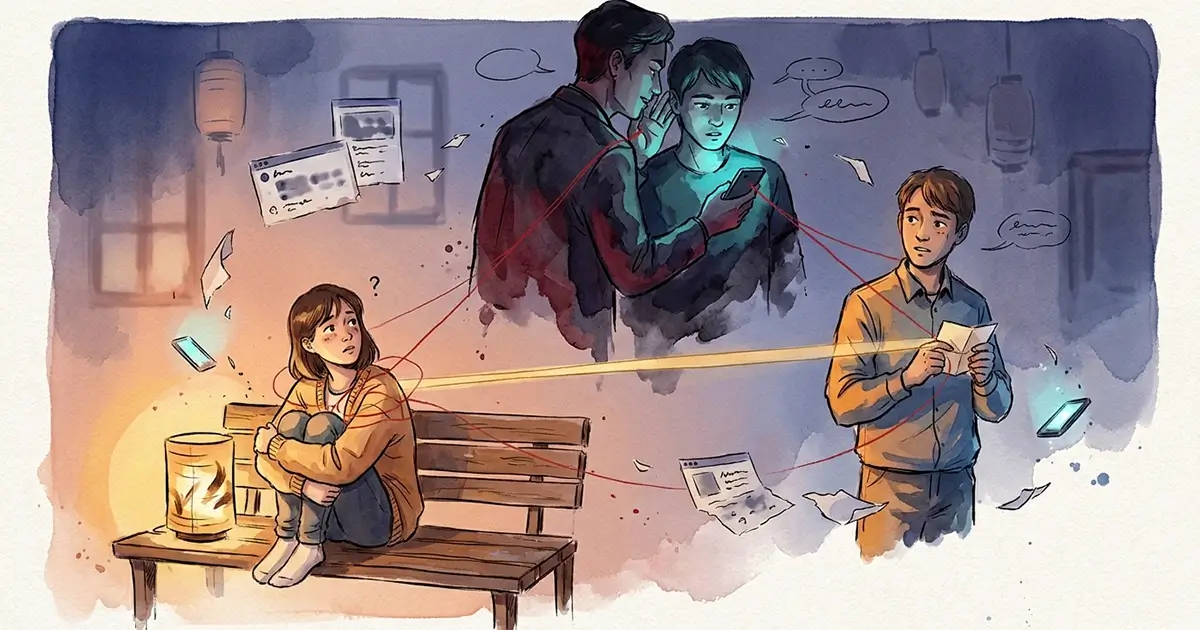
You notice it slowly. A friend replies to you more slowly, yet seems to be chatting with everyone else. A plan gets made without you. Someone says, “I’m only telling you because I care,” and then repeats something you supposedly said about a person you barely mentioned. Suddenly you are the problem in a story you never got to hear.
If that sounds familiar, you may be dealing with triangulation in friendships. It is one of the quietest forms of social manipulation, because nothing dramatic ever happens in front of you. The damage happens in side conversations, group chats and carefully worded “concerns.”
This guide explains what triangulation is, how it works in the digital age, the signs to look for, and how to respond without losing your dignity or your sanity.
What is Triangulation in Friendships?
Triangulation is a communication pattern where one person pulls a third party into a conflict instead of dealing with the other person directly. Instead of a two-way conversation between A and B, it becomes a triangle: A talks to C about B.
Sometimes this is harmless venting. A friend has a bad week and needs someone to talk to. In triangulation, the goal is different. The person is shaping how others see you, collecting allies, or creating tension so they stay at the center of attention.
Psychologists often describe it as a way of avoiding accountability. It is easier to build a coalition than to say, “That comment hurt me.” The third person becomes a shield, a messenger or a jury.
Why Friend Group Triangulation Happens
Nobody wakes up planning to isolate someone. Friend group triangulation usually grows out of a few familiar motives.
- Fear of direct conflict. Some people never learned to say a hard thing face to face. Talking about you feels safer than talking to you.
- A need for control. If one person manages the narrative, they control who is included, who is trusted and who is quietly pushed out.
- Insecurity and jealousy. When someone feels threatened by your success or your closeness with the group, undermining your reputation can feel like protection.
- Attention. Being the one who “knows things” and delivers “updates” gives some people a sense of importance.
None of this excuses the behavior, but understanding it helps you stop treating it as proof that something is wrong with you.
How Digital Triangulation Works
Group chats, screenshots and read receipts have given triangulation new tools. What once took weeks of whispering can now happen in an afternoon.
Screenshots Without Context
A single message gets captured and shared in another chat. Your sarcastic reply, a vent sent in confidence or a joke that only made sense in tone becomes “evidence.” Without the surrounding conversation, almost anything can be made to look cruel.
The “I Heard That...” Message
This is the classic opener. “I heard that you said...” rarely names a source and rarely invites a response. It plants doubt and leaves you scrambling to defend yourself against a claim you cannot trace.
The Group Chat You Are Not In
You might notice friends suddenly awkward, or inside jokes you cannot decode. Often there is a separate thread where your behavior is being discussed and conclusions are being reached without you.
The “Concerned” Friend
This is the most disguised form. The triangulator frames gossip as care: “Everyone is worried about you.” “I’m just saying this because I love you.” Concern gives them cover, and questioning it makes you look defensive.
The Messenger Friend Who Does Not Realize They Are Being Used
Not everyone in the triangle is a villain. Often there is a messenger, someone who passes comments along because they honestly believe they are helping.
The triangulator might say, “I’m worried about Mei Ling, but I don’t want to upset her. Could you check in?” The messenger feels trusted and useful. They deliver the message gently, and without meaning to, they become a tool for someone else’s agenda.
This is why the “flying monkeys” label, popular in online communities, can be unfair. Some messengers act out of loyalty, not malice. Before you assume the worst, consider whether your friend is carrying someone else’s story without realizing it.
7 Signs of Triangulation in Friendships
No single sign proves anything. Look for a pattern.
- You hear about conflict from third parties. Problems reach you through other people, never from the person who has them.
- Stories change depending on the listener. One friend gives you a version of events and gives others a very different one.
- You are compared to others. “Why can’t you be more like Rachel?” pits you against someone and keeps you anxious.
- Friends suddenly go cold. People who were warm become distant with no explanation.
- You feel watched in group chats. You edit your messages, wondering who might screenshot them.
- Concern arrives with no solution. You hear that “people are upset,” but nobody will say who or why.
- You are asked to pick a side. Loyalty tests like “Whose side are you on?” are a hallmark of toxic friend manipulation.
If several of these feel familiar, it is worth looking closer.
Four Realistic Examples of Triangulation in Friendships
Example 1: The Screenshot in the Group Chat

Priya, 29, lives in Singapore and has been friends with Jasmine since university. After a tiring week, Priya messages Jasmine privately: “Honestly, I’m dreading Amanda’s engagement dinner. I can’t keep pretending to be thrilled.” It is a private vent, and Priya feels better after sending it.
Two days later, a screenshot of that message appears in the six-person group chat, posted by Jasmine with the comment, “Not sure how to feel about this.” Nobody asks Priya what she meant. Amanda goes quiet. Priya is left explaining herself to people who have already decided.
Notice the technique. There is no accusation, only a screenshot and a vague caption that lets everyone else do the judging.
Example 2: The Concerned Friend

Daniel, 34, from Austin, gets a call from his friend Marcus. “Hey, a few of us have noticed you’ve been really negative lately. We’re just worried.” Daniel asks who “us” is. Marcus replies, “I don’t want to name names. It would make things awkward.”
Daniel spends the next week replaying every conversation, wondering who he offended. At the next barbecue he studies everyone’s faces for clues. Later, he learns that Marcus was the only person who felt that way, and he had invented a group to give his opinion more weight.
The “concerned friend” tactic works because it is hard to argue with worry. Yet worry that cannot be explained, sourced or resolved is usually something else.
Example 3: The Unwitting Messenger

Emily, 31, lives in Chicago. Her friend Rachel tells her, “Sarah mentioned you’re always flaky about plans. I thought you’d want to know.” Emily is mortified and sends Sarah an apology the next day. Sarah is baffled. She made one frustrated comment weeks ago to a mutual friend, Karen, who passed it to Rachel.
Rachel was not trying to hurt anyone. She believed she was being honest and helpful. But by delivering second-hand gossip without checking it, she became the messenger in a triangle she never saw.
When Emily calmly asked, “Can we talk to Sarah together?” the story fell apart. Messengers often change course once they realize they are being used.
Example 4: The Spouse Who Sees It Clearly

Li Na, 36, and her husband Jason live in Singapore. Li Na’s close friend Cheryl is feuding with another friend, Amanda. Cheryl keeps calling Li Na late at night to list Amanda’s faults, then asks, “You agree with me, right?” When Li Na gives a neutral answer, Cheryl tells the wider group that Li Na “is on my side.”
Jason notices his wife growing anxious and short-tempered after every call. Over dinner, he asks, “Is Cheryl asking you to choose?” Saying it aloud helps Li Na see the pattern. She tells Cheryl, “I care about you both, and I’m not going to discuss Amanda anymore.”
A spouse or trusted outsider can offer a clear view when you are too close to the situation.
How to Deal with Triangulation in Friendships
You cannot control what others say about you, but you can control how you respond.
Pause Before You React
Triangulation is designed to provoke. A fast, emotional reply, especially in a group chat, can become the next screenshot. Give yourself a few hours before you answer anything.
Go to the Source Directly
Speak privately to the person involved, ideally by voice or in person. You might say, “I heard something secondhand and I’d rather hear it from you. Can we talk?” This removes the middleman and shows you prefer honesty to drama.
Refuse to Carry or Confirm Gossip
If someone brings you a story, respond with, “That sounds like something to raise with them directly.” You protect yourself and avoid becoming the next messenger.
Use Gray Rocking With a Persistent Triangulator
If someone keeps stirring things up despite your boundaries, becoming a dull target can help. Short, neutral replies give them nothing to screenshot or twist.
Protect Your Side of the Story
Write every message as if others may read it, without being paranoid or fake. Keep emotional processing for people who have earned your trust, and keep your tone calm in shared spaces.
Decide What the Friendship Is Worth
Some friendships can be repaired once the pattern is named. Others cannot. If the behavior continues after you have spoken honestly, stepping back is a valid choice.
Frequently Asked Questions
What is triangulation in friendships?
It is when one person involves a third person in a conflict rather than addressing it directly with the other person. It often shows up as gossip, loyalty tests or messages relayed through others.
Is every instance of venting to a friend triangulation?
No. Seeking support is normal. It becomes triangulation when the goal is to build alliances, damage someone’s reputation or avoid speaking to the person directly.
What does “flying monkeys” mean in friendships?
The term describes people who carry messages or pressure on behalf of a manipulator. Many are unaware of it, so approach them with curiosity before judgment.
How do I know if I am being triangulated or just imagining it?
Look for patterns over time: stories that change, vague “concerns,” friends turning cold and information reaching you only through others. One awkward moment is not a pattern.
Should I confront the group or the person at the center?
Start with the person at the center, privately and calmly. Confronting a whole group usually escalates things and gives the triangulator more material.
Final Thoughts
Triangulation thrives on confusion and silence. It works because most of us would rather avoid conflict than ask a direct question. The best antidote is simple: direct communication, steady boundaries and friends who are willing to say things to your face.
You are not too sensitive for noticing a pattern. Trust what you observe, speak to people directly and invest in friendships where honesty is the default.
Have you ever experienced triangulation in a friendship? Share your thoughts and experiences in the comments below.




Comments (0)
No comments yet. Be the first to share your thoughts!
Leave a comment
Your comment will appear after it's reviewed. Your email is never shown publicly.