
Why Do You Always Assume the Worst? Understanding Catastrophizing
Learn what catastrophizing is, why people assume the worst, common signs, examples, coping strategies, and FAQs.
 Berry Bits
·
June 27, 2026
·
6 min read
Berry Bits
·
June 27, 2026
·
6 min read
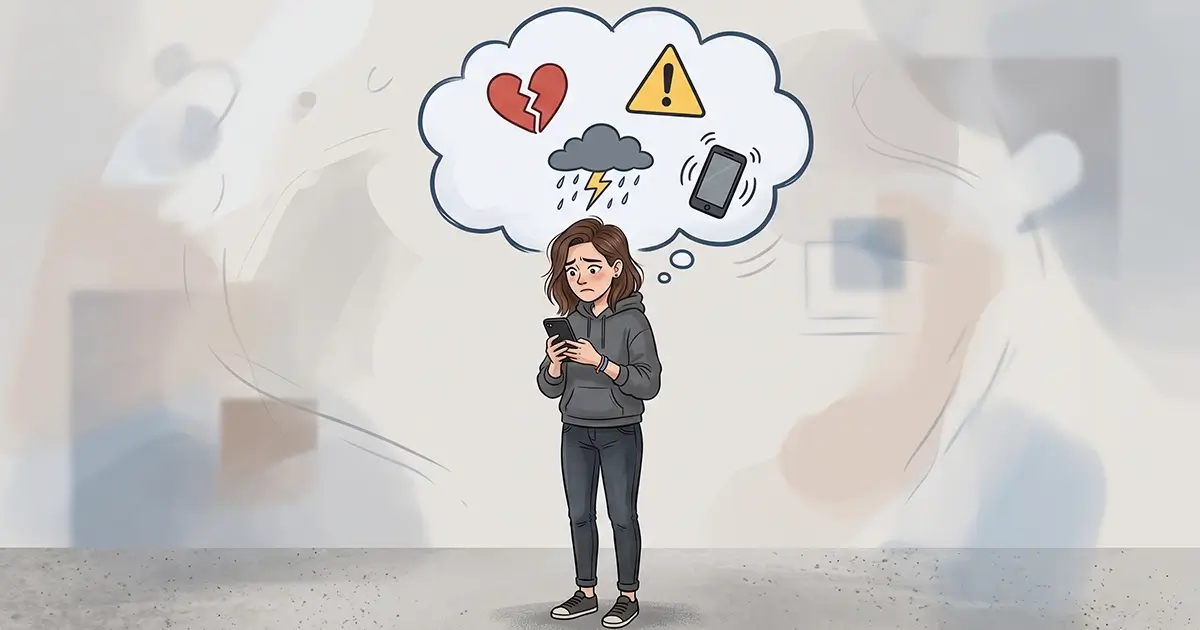
Catastrophizing is a cognitive distortion where the brain instinctively accelerates toward the most catastrophic conclusion in response to ambiguity. It functions as a mental alarm system that has become hypersensitive, treating everyday uncertainties as immediate existential threats. When a text message is delayed, a colleague provides brief feedback, or a minor health fluctuation occurs, the catastrophizing mind bypasses neutral or positive interpretations entirely. Instead, it constructs a vivid, distressing narrative where the outcome is always disastrous. Understanding this pattern is not merely a philosophical exercise; it is the fundamental requirement for reclaiming emotional stability and rational decision-making.
The Mechanism of the "Worst-Case" Bias
At its core, catastrophizing is a survival mechanism gone rogue. Evolutionarily, humans who assumed the worst—the rustle in the grass was a predator rather than the wind - were more likely to survive. However, in a modern environment where threats are often social, professional, or digital rather than biological, this "better safe than sorry" heuristic becomes maladaptive.
When we catastrophize, our prefrontal cortex - the part of the brain responsible for logical reasoning - is essentially hijacked by the amygdala, the brain's emotional processing center. This shift causes us to prioritize fear over facts. We fill the gaps in our information with worst-case assumptions, viewing these assumptions not as possibilities, but as inevitable facts. This narrowing of focus prevents us from seeing the full spectrum of reality, where neutral or positive outcomes are often far more probable.
Analyzing the Patterns of Distortion
Example 1: The Professional Spiral

A typo in a high-stakes email can trigger a cascade of anxiety. The catastrophizing mind does not see a simple human error; it sees an unrecoverable professional disaster. It envisions the recipient immediately forwarding the mistake to management, followed by a performance review, and ultimately, termination.
In reality, the range of alternative explanations is vast. The recipient may have already corrected the typo without a second thought, they may have failed to notice it entirely, or they may simply recognize it as a byproduct of a busy workday. Catastrophizing ignores this nuance, replacing evidence with a narrative of impending professional doom.
Example 2: The Health Trap

A mild, fleeting headache or a slight ache is often misinterpreted by the catastrophizing mind as a harbinger of a grave, life-altering illness. This is commonly referred to as health anxiety, where the mind ignores the prevalence of mundane causes - such as dehydration, lack of sleep, or simple muscle tension - in favor of the most dramatic diagnosis possible.
By fixating on the worst-case scenario, the individual creates physical stress responses, such as increased heart rate and shallow breathing, which in turn exacerbate the physical symptoms. This creates a feedback loop of fear, where the very act of worrying intensifies the physical sensations that started the process.
Example 3: The Interpersonal Misinterpretation

A cancelled dinner plan or a sudden shift in someone’s communication style can be devastating to a mind prone to catastrophizing. The immediate conclusion is that the friendship is failing or that the person is intentionally distancing themselves. The narrative quickly shifts to feelings of personal rejection or unworthiness.
However, the reality is usually dictated by the other person’s external circumstances - an urgent work deadline, a family crisis, or simple exhaustion. By assuming the absolute worst, the catastrophizing individual often reacts with defensive behavior, which can ironically create the very strain in the relationship they were originally afraid of.
Example 4: The Digital Uncertainty

The modern era of instant communication has heightened our susceptibility to catastrophizing. A late text reply or a missed call is frequently decoded as a sign of a crisis. The mind paints a picture of a car accident, a sudden disappearance, or a major life emergency.
While these events are statistically rare, the catastrophizing brain assigns them high probability. This constant state of high-alert communication creates unnecessary emotional exhaustion. We must learn to distinguish between actual data and our internal projections of dread.
Strategies for Deconstruction
Managing catastrophizing requires a deliberate, practiced shift in how we process information. It is not about eliminating worry, but about changing our relationship with the "what-ifs."
- The Tactical Pause: When you feel that surge of anxiety, force yourself to stop. Do not act on the initial, panicked impulse. Use this time to physically calm your nervous system through controlled breathing.
- The Evidence Audit: Ask yourself: "What evidence do I have that this disaster is actually happening?" Usually, you will find that you have zero evidence, only feelings.
- The Alternative Search: Force yourself to generate three logical, benign explanations for the situation. If you are worried about a delayed text, consider that the person might have left their phone in another room or simply forgotten to hit send.
- Control Calibration: Identify what is within your sphere of influence. Often, catastrophizing focuses on things we cannot control - the thoughts of others or the future. Pivot your energy toward immediate, actionable steps within your current environment.
Frequently Asked Questions
What is catastrophizing?
It is a cognitive bias where the mind prematurely concludes that the worst possible scenario is the most likely one, effectively turning minor uncertainties into crises.
Can everyone catastrophize?
Yes. It is a universal human experience. While some individuals have a higher baseline tendency toward it, virtually everyone experiences moments of catastrophizing during times of high stress, fatigue, or transition.
How can I reduce catastrophizing?
The most effective approach involves cognitive restructuring. By pausing to challenge your initial assumptions, seeking concrete evidence, and consciously generating alternative possibilities, you can weaken the habit of jumping to extreme conclusions.
Is catastrophizing the same as being prepared?
No. Preparation involves assessing risks and creating a plan to handle them. Catastrophizing involves dwelling on the fear of the outcome to the point of emotional paralysis, which actually diminishes your ability to be prepared or productive.
Why is it so hard to stop?
The brain is wired for safety, and negative patterns often feel safer because they prepare us for "danger," even if that danger is non-existent. Breaking this cycle requires the consistent, repetitive effort of training the brain to prioritize objective reality over instinctive fear.
Conclusion
Catastrophizing is a lens through which we view our lives - a lens that magnifies shadows and obscures the light. By recognizing this distortion, we regain the ability to see things as they are, rather than as our fears suggest they might be. It is a process of reclaiming our cognitive agency, one logical check at a time. While the temptation to imagine the worst will always be there, your power lies in your ability to choose a different path - one grounded in evidence, reason, and a more accurate assessment of the world around you.




Comments (0)
No comments yet. Be the first to share your thoughts!
Leave a comment
Your comment will appear after it's reviewed. Your email is never shown publicly.