
Survivorship Bias: Definition, Examples & How to Avoid it
What survivorship bias is, why it distorts decisions, and how to spot it — with the WWII plane story, real-world examples, and practical fixes.
 Berry Bits
·
September 7, 2026
·
7 min read
Berry Bits
·
September 7, 2026
·
7 min read

You're Only Hearing From the Survivors
Picture a business bookshelf. Every title promises a formula: wake up at 5 a.m., drop out of college, take the risk. Each book is written by someone it worked for.
Here's the problem. Nobody writes a bestseller titled "I Dropped Out of College and It Ruined My Life." The people it didn't work for don't get a book deal. They don't get interviewed. They quietly disappear from the story entirely.
That's survivorship bias, and it's one of the most common — and least noticed — thinking errors humans make.
If you want a deeper dive into any single piece of this, we've already covered them individually:
What Is Survivorship Bias?
Survivorship bias is the tendency to focus on the people, companies, or things that "survived" a selection process, while overlooking the ones that didn't — because the failures are no longer around to be counted.
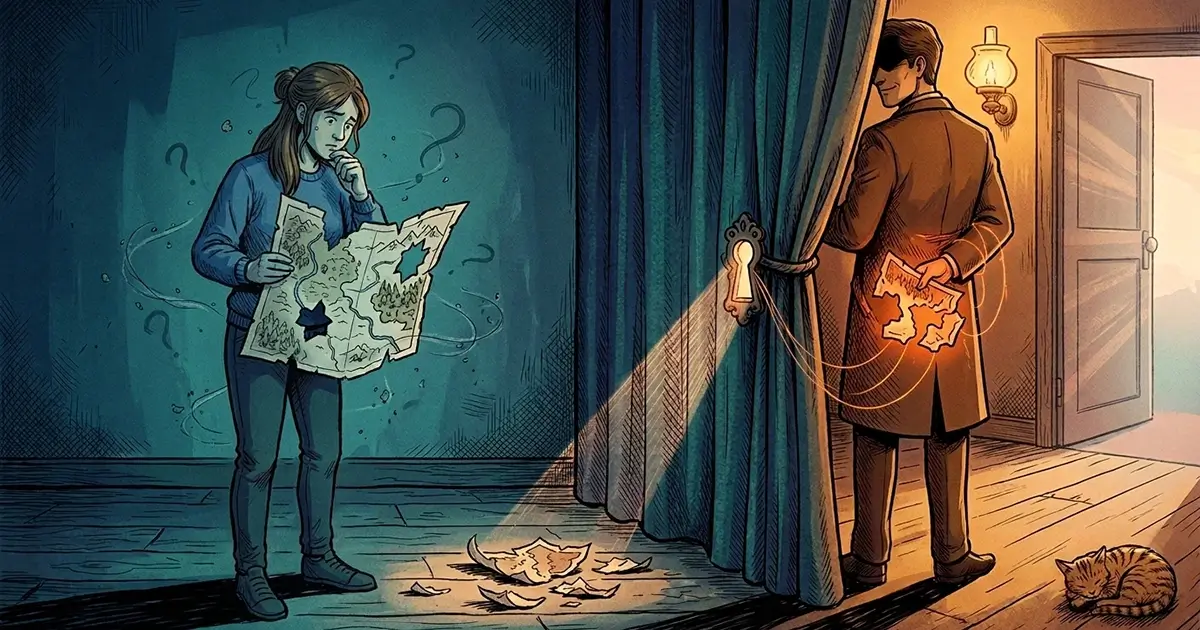
The result is a skewed sample. You're not looking at everyone who tried something. You're only looking at the winners, and then drawing conclusions as if they represent everybody.
It feels like pattern recognition. It's actually an illusion built on missing data.
The WWII Plane Story That Explains It Best
During World War II, the U.S. military was trying to figure out where to add armor to their bomber planes. Armor is heavy, so they couldn't cover the whole aircraft — they needed to reinforce the spots that mattered most.
Researchers studied the planes that returned from combat missions and mapped out where the bullet holes were concentrated. The damage clustered on the wings, the tail, and the body of the fuselage. The natural conclusion: reinforce those areas.
Statistician Abraham Wald disagreed. He pointed out that the military was only looking at planes that survived and made it home. The bullet holes on those planes marked spots where a plane could take damage and still fly.
The planes that got hit in the engine, the cockpit, or the fuel system never made it back. There was no data from them — because they were gone.
Wald's recommendation flipped the entire approach: armor the areas without bullet holes on the returning planes, because that's where a hit was fatal. This single insight is now considered one of the most important applications of statistical thinking in military history.
Why This Bias Is So Easy to Fall For
Survivorship bias sneaks past our defenses for a simple reason: the failures are invisible by default. Nobody has to hide them. They just aren't there to look at.
We evaluate the world based on available evidence, and available evidence is disproportionately made up of success stories. Winners write memoirs. Failed startups don't hold press conferences. Extinct species don't leave behind a spokesperson.
So we build our models of "what works" from a sample that was pre-filtered by survival itself — and we don't even notice the filter happened.
Example 1: The Self-Made Millionaire Myth

Every industry has its icon: the founder who skipped college, bet everything on one idea, and built an empire. Their story gets repeated in interviews, documentaries, and LinkedIn posts as proof that big risks pay off.
What's missing is the denominator. For every founder who dropped out and succeeded, there are thousands who dropped out, took the same risk, and ended up with nothing to show for it — no book deal, no headline, no cautionary tale anyone remembers.
The "successful dropout" isn't proof that dropping out works. It's proof that if enough people take a risky path, a few will get lucky, and those few will be the only ones anyone hears about.
Example 2: Mutual Fund Performance Reports

Investment companies love to advertise the historical performance of their funds. The numbers often look impressive, sometimes beating the market for a decade straight.
Here's the catch: badly performing funds tend to get quietly closed or merged into other funds. They disappear from the company's public track record. Only the funds that survived long enough to look good are still listed.
This is called "survivorship bias in finance," and it's a well-documented reason why historical mutual fund data often looks better than it should. The losers were deleted from the story before you ever saw it.
Example 3: "Old Buildings Were Built Better"

People often point to centuries-old churches, bridges, and homes as proof that construction used to be higher quality. "They don't build them like they used to," the saying goes.
But think about which old buildings you're actually seeing. The poorly built structures from that same era collapsed, burned down, or were demolished generations ago. The ones still standing today are, by definition, the sturdiest examples from their time period.
You're not comparing average old construction to average new construction. You're comparing the best-surviving fraction of the past to an unfiltered sample of the present.
Example 4: Motivational Success Stories in Fitness and Business Coaching

Coaching programs frequently showcase client transformations — dramatic before-and-after photos, six-figure income screenshots, dramatic weight loss timelines.
These testimonials are real, but they represent the people who stuck with the program, saw results, and agreed to be featured. The far larger group who paid for the same program, didn't see results, and quietly stopped participating are never shown.
A wall of success stories can make a program look like it has a near-universal success rate, when in reality it might be showcasing the top 5% of outcomes while staying silent about the rest.
How to Avoid Survivorship Bias
You can't eliminate this bias completely, but you can build habits that catch it before it shapes a decision.
Ask what's missing, not just what's present. Before drawing a conclusion from a success story, ask: who tried this and failed? Where would I find them if they existed?
Look for the full population, not just the visible winners. If you're evaluating a strategy, search for dropout rates, failure rates, or discontinued examples — not just the highlight reel.
Be suspicious of "best of" evidence. Rankings, testimonials, and case studies are almost always drawn from survivors. Treat them as anecdotes, not statistics.
Check how the sample was filtered. Ask what happened to the data points that didn't make the cut — were they excluded, closed, or simply never counted?
Remember Wald's planes. When something seems to have a pattern in the data you can see, pause and ask what data you can't see, and why.
Frequently Asked Questions
What is survivorship bias in simple terms?
It's the mistake of drawing conclusions from a group of "survivors" — people or things that made it through some process — while ignoring everyone who didn't make it through and is no longer part of the visible sample.
What is the classic example of survivorship bias?
The WWII bomber story is the most cited example. Researchers almost armored the wrong parts of returning aircraft because they only studied planes that survived combat, not the ones that were shot down.
How is survivorship bias different from confirmation bias?
Confirmation bias is about favoring information that supports what you already believe. Survivorship bias is about the data itself being incomplete, because the failures were removed from the sample before you ever saw it.
Where does survivorship bias show up in everyday life?
It shows up in success stories, investment performance reports, "old things were better" arguments, testimonials, and even casual advice like "just follow your passion," which usually comes from people it happened to work out for.
Can survivorship bias be avoided completely?
Not entirely, since missing data is often genuinely hard to find. But actively asking "what happened to everyone who isn't in this sample?" significantly reduces how often it distorts your judgment.
Final Thoughts
Survivorship bias is quiet because it doesn't feel like a mistake. It feels like learning from evidence. The problem is that the evidence was filtered long before it reached you — by failure, by closure, by silence.
The fix isn't complicated, but it does require a habit shift: before trusting a pattern in the winners, go looking for the people who aren't in the room anymore. That missing group is often where the real lesson is hiding.



Comments (0)
No comments yet. Be the first to share your thoughts!
Leave a comment
Your comment will appear after it's reviewed. Your email is never shown publicly.