
Why Gaslighting Works: The Psychology Behind It
Gaslighting isn't random - it runs on cognitive dissonance and intermittent reinforcement. Here's the psychology that makes it so hard to escape.
 Berry Bits
·
July 24, 2026
·
7 min read
Berry Bits
·
July 24, 2026
·
7 min read
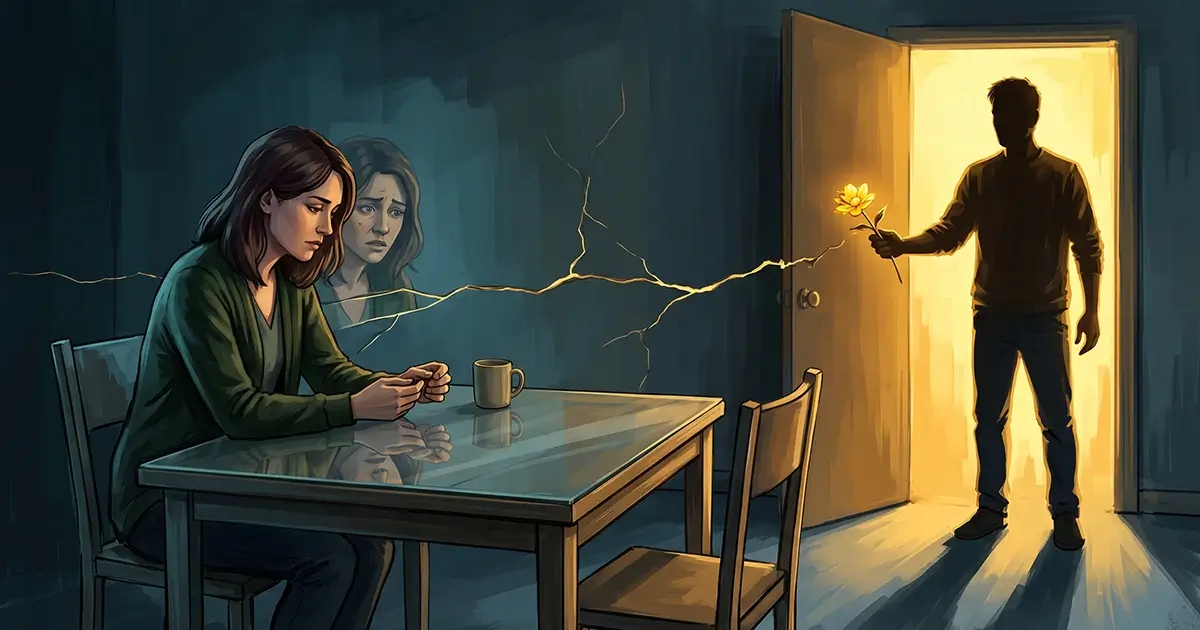
Gaslighting isn't random cruelty. It's not just "lying" either. It's a slow, systematic rewiring of someone's trust in their own mind — and it works because it hijacks two very specific, very well-documented psychological mechanisms: cognitive dissonance and intermittent reinforcement.
Once you understand how these two forces combine, gaslighting stops looking mysterious. It starts looking like a pattern — one your brain is almost designed to fall for.
The Two Engines Behind Gaslighting
Every gaslighting dynamic runs on the same two engines, working together.
Cognitive dissonance is the mental discomfort you feel when two beliefs clash — like "this person loves me" and "this person just hurt me." To resolve that discomfort, the brain often changes the easier belief. It's usually easier to doubt your own perception than to accept that someone you trust is hurting you on purpose.
Intermittent reinforcement is a reward pattern where good and bad treatment arrive unpredictably. Psychologically, unpredictable rewards are far more addictive than consistent ones — it's the same mechanism that makes slot machines so compelling. When affection is randomly scattered between periods of manipulation, the brain clings harder to the good moments, hoping to earn them back.
Gaslighting works because it forces cognitive dissonance while dangling intermittent reinforcement as the "reward" for staying confused and compliant.
Example 1: The Promotion That Wasn't

Maria was told by her manager that she'd be considered for a team lead role "next quarter." When the quarter ended and someone else got the promotion, she brought it up. Her manager looked confused and said, "I never said next quarter — I said eventually, when the time was right."
Maria had a written Slack message confirming the timeline. But in the moment, faced with her manager's calm certainty, she found herself second-guessing her own memory instead of pulling up the message.
This is cognitive dissonance in action. It was easier for Maria's brain to briefly doubt her memory than to accept that her manager was being dishonest to her face. The manager's calm, confident delivery did the heavy lifting — confidence is often mistaken for credibility.
Example 2: The On-Again, Off-Again Partner

Daniyal's partner would disappear emotionally for days — short replies, cold tone, no explanation — and then suddenly show up with flowers, an apology, and the most attentive version of themselves. Daniyal described those good days as "like getting him back."
This is textbook intermittent reinforcement. The unpredictability of the good moments made them feel more valuable, not less. Daniyal wasn't staying for the bad days — he was staying for the unpredictable high of the good ones, which felt earned rather than random.
Over time, this pattern trains a person to tolerate more distance, because the reward — reconnection — feels increasingly precious the harder it is to get.
Example 3: The Family Group Chat Rewrite

After a tense family dinner where Amara's brother raised his voice at her in front of everyone, the family group chat lit up the next day with messages about what a "lovely evening" it had been. When Amara mentioned the shouting, her mother replied, "Nobody shouted, you're remembering it wrong — you always do this."
This is a group-level version of gaslighting, and it's especially powerful because dissonance is harder to resist when multiple people reinforce the same false narrative. Amara wasn't just doubting her memory against one person's word — she was doubting it against a chorus.
Group gaslighting often relies on social proof: if enough people agree on a version of events, disagreeing with it starts to feel like the irrational position, even when you were there.
Example 4: The Apology That Blames You

Farid confronted his roommate about going through his mail without asking. The roommate responded, "I only did that because you've been so distant lately — if you actually talked to me, I wouldn't have to guess what's going on with you."
Notice what happened here: the apology never arrived. Instead, the boundary violation got reframed as a reasonable reaction to Farid's own behavior. Farid left the conversation feeling guilty, not heard.
This tactic works because it introduces a competing narrative fast enough that the original issue never gets resolved. The brain, faced with two problems now, often fixates on the newer, more urgent-feeling one — "am I being distant?" — and quietly drops the first.
Why the Brain Falls For This
None of this happens because someone is gullible or weak. It happens because the brain is wired to prioritize relationship stability over factual accuracy in the short term. Doubting yourself feels safer, in the moment, than doubting someone you depend on.
Add unpredictable rewards into that mix, and the brain starts treating the relationship itself like a puzzle to solve rather than a pattern to escape. Every good moment becomes evidence that the "real" version of the person is still in there — worth waiting for, worth doubting yourself for.
This is also why gaslighting rarely feels dramatic from the inside. It builds through small, repeated moments of self-doubt, not one big lie.
How to Interrupt the Pattern
Awareness alone doesn't undo gaslighting, but it does slow it down. A few habits help:
Write things down. Notes, texts, and voice memos create a record that doesn't shift based on how confidently someone denies it.
Notice the pattern, not the moment. A single confusing conversation isn't proof of gaslighting. A repeated cycle of denial, doubt, and reward usually is.
Bring in outside perspective. Cognitive dissonance is weaker when someone outside the dynamic can confirm what you experienced.
Separate the good moments from the whole picture. The relief of a good day doesn't cancel out the pattern — it's often part of what keeps the pattern running.
FAQs
Is gaslighting always intentional?
Not always. Some people gaslight deliberately as a control tactic. Others do it unconsciously, often repeating patterns they learned or experienced themselves. The impact on the person being gaslit is similar either way, even if the intent differs.
Why do smart, self-aware people fall for gaslighting?
Because gaslighting doesn't target intelligence — it targets trust and attachment. The more someone cares about a relationship, the more motivated their brain is to resolve dissonance in the other person's favor.
What's the difference between gaslighting and a normal disagreement?
A normal disagreement allows both people's perspectives to exist. Gaslighting insists that your perspective is simply wrong or invented, often repeatedly and across unrelated situations.
Can gaslighting happen outside romantic relationships?
Yes. It shows up in workplaces, friendships, and families, as shown in the examples above. Any relationship with an imbalance of trust, dependency, or power can become a setting for it.
How long does it take to recognize gaslighting while it's happening?
It varies widely, and for many people it takes months or years, because the pattern builds gradually. Recognizing intermittent reinforcement and cognitive dissonance as concepts often speeds up that recognition.
Final Thoughts
Gaslighting isn't a mystery once you see the mechanics behind it. It's not about someone being "crazy" or "too sensitive" — it's about two very normal psychological processes being used against you, often by someone who has learned, consciously or not, exactly which buttons to press.
The good news is that the same awareness that makes gaslighting effective can also make it lose its grip. Once you can name the pattern — the dissonance, the unpredictable rewards, the doubt — it becomes much harder for someone to rewrite your reality without you noticing.
Trusting your own memory isn't stubbornness. It's the first thing gaslighting tries to take from you, and it's usually the first thing worth taking back.
Want me to drop this into the markdown file, or are you pasting it in manually on your end?



Comments (0)
No comments yet. Be the first to share your thoughts!
Leave a comment
Your comment will appear after it's reviewed. Your email is never shown publicly.