
How to Overcome the Sunk Cost Fallacy: 5 Simple Steps
Stuck in a job, project, or relationship you should leave? Learn how to overcome the sunk cost fallacy and decide based on the future, not the past.
 Berry Bits
·
October 26, 2026
·
10 min read
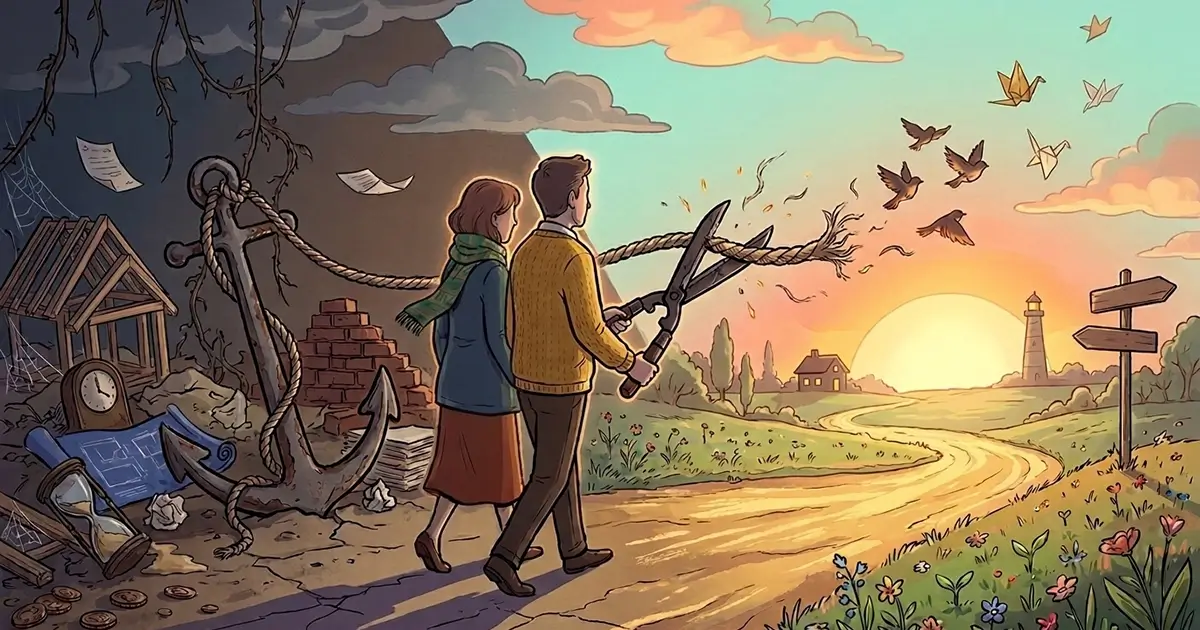
You bought the ticket, so you sit through the terrible movie. You've spent years on a plan, so you keep funding it. You've invested so much in something that walking away feels impossible, even when every part of you knows it's no longer working.
If any of this sounds familiar, you've experienced the sunk cost fallacy. It is one of the most common thinking traps in human behavior, and it quietly shapes decisions about work, money, home, and relationships.
The good news is that you can learn to spot it and escape it. This guide explains what the sunk cost fallacy is, why it holds such a grip on us, and how to overcome it in five simple steps, each illustrated with an example following Sara and her husband, Daniel.
What Is the Sunk Cost Fallacy?
A "sunk cost" is anything you've already spent that you cannot get back: time, money, effort, or emotional energy. The sunk cost fallacy is the tendency to keep investing in something because of what you've already put in, rather than because of what it will give you from here on.
Here's the key idea: sunk costs are gone no matter what you choose. If you continue, the money is still spent. If you quit, the money is still spent. Since the past cost is identical in both scenarios, it should have no influence on your decision. Only future costs and future benefits matter.
Yet we rarely think this way. Walking away feels like "wasting" our earlier investment, so we stay and waste even more.
Why Is It So Hard to Let Go?
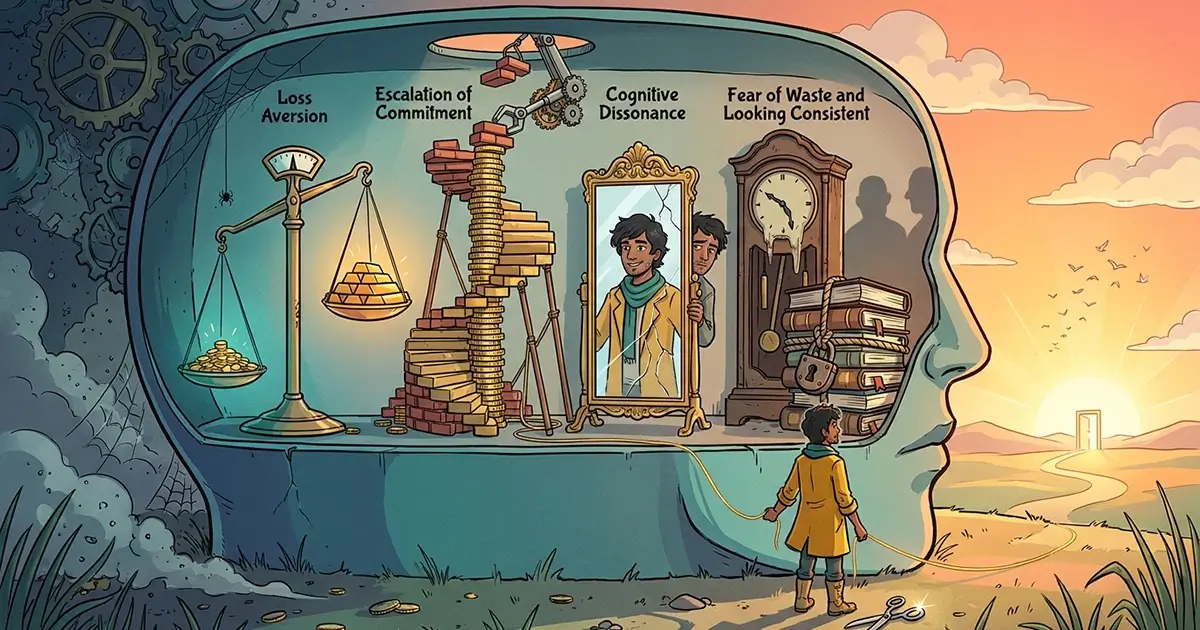
Understanding why we fall for this trap makes it easier to avoid. Several psychological forces are at work:
- Loss aversion. Losses feel roughly twice as painful as equivalent gains feel good. Quitting makes the loss real and visible, so we avoid it.
- The need for consistency. Most of us want to see ourselves as committed and persistent. Changing course can feel like admitting a mistake.
- Fear of judgment. We worry about hearing, "You spent that long on it and just gave up?"
- Emotional attachment. The more of ourselves we invest, the more it feels like part of our identity.
- Optimism bias. We tell ourselves it's bound to turn around soon. Often it doesn't, and the waiting is the expensive part.
None of these instincts make you foolish. They make you human, and recognizing them is the first step toward stopping sunk cost thinking.
Common Signs You're Caught in the Sunk Cost Trap
Before you can fix the problem, you need to notice it. Watch for these warning signs:
- You say "I've come too far to quit" more often than "this is still the right path."
- You would not choose this option if you were starting fresh today.
- You feel dread, not excitement, about continuing, yet you continue anyway.
- Your reasons for staying are all about the past, never about the future.
How to Overcome the Sunk Cost Fallacy: 5 Simple Steps
Step 1: Name the Sunk Costs Out Loud
The fallacy thrives in vagueness. Start by writing down exactly what you've invested so far: the money, the years, the energy, the emotional weight. Then label it clearly: "These are sunk costs. They are gone regardless of what I decide next."
This small act separates the past from the present, and the costs lose some of their emotional grip.
Example 1: The Endless Renovation

Sara and Daniel have spent three years and most of their savings renovating a house they've both stopped enjoying. The living room is still half finished, with peeling wallpaper, exposed beams, and paint cans everywhere, and the coin jar for "the final touches" sits empty. Every month they repeat the same sentence: "We can't sell now, not after everything we've put in."
One evening, Sara lists the sunk costs: the savings, the weekends, the arguments over paint colors. Then she labels them: gone either way. She and Daniel realize the question isn't whether the money was spent. It's whether the next three years here will be good ones. They decide to sell, hand over the keys, and pack the boxes for a neighborhood that suits their life.
Step 2: Ask the "Fresh Start" Question
This is the most powerful tool for sunk cost decision making. Ask yourself:
"If I were starting from zero today, knowing everything I now know, would I choose this again?"
If the answer is a clear yes, then staying is a genuine choice, not a trap. If the answer is no, you've learned something important: your commitment is being driven by the past, not the future.
Example 2: The Tired Family Business

For eight years, Sara and Daniel have run a small shop together. The shelves are dusty, the display is half empty, and the chalkboard graph behind the counter has been flat for three years. Both are exhausted, but neither wants to say it out loud.
One slow afternoon, Daniel asks the fresh start question: "If we had this money and these years back, would we open this shop today?" The silence says it all. The answer is no. That doesn't mean they failed. They built something real. It means they can now choose a better use of the years ahead, together. They lock the shop door side by side, carrying a small box of their favorite items, as a green sprout pushes through a crack in the pavement.
Step 3: Focus Only on Future Costs and Benefits
Now flip your attention completely to what's ahead. Create two simple lists for each option you're weighing:
- What will this cost me from today forward? (time, money, stress, opportunity)
- What will this realistically give me from today forward? (income, growth, happiness, peace)
Be honest about "realistically," and remember opportunity cost: every hour and dollar spent on something that isn't working can't be spent on something that might.
Example 3: The Wrong Career

Before the shop, Sara spent six years and a significant amount in tuition earning a degree in a field she slowly realized she disliked. Staying on that ladder felt like the only way to justify the cost.
So she stopped looking backward and made two lists: what another ten years in this field would realistically cost and give her, and what a related, more creative field would offer. The second list was clearly stronger. She stepped off the first ladder and onto the second, diploma tucked under her arm. Her education wasn't wasted; its skills transferred perfectly. It simply stopped controlling her future.
Step 4: Get an Outside Perspective
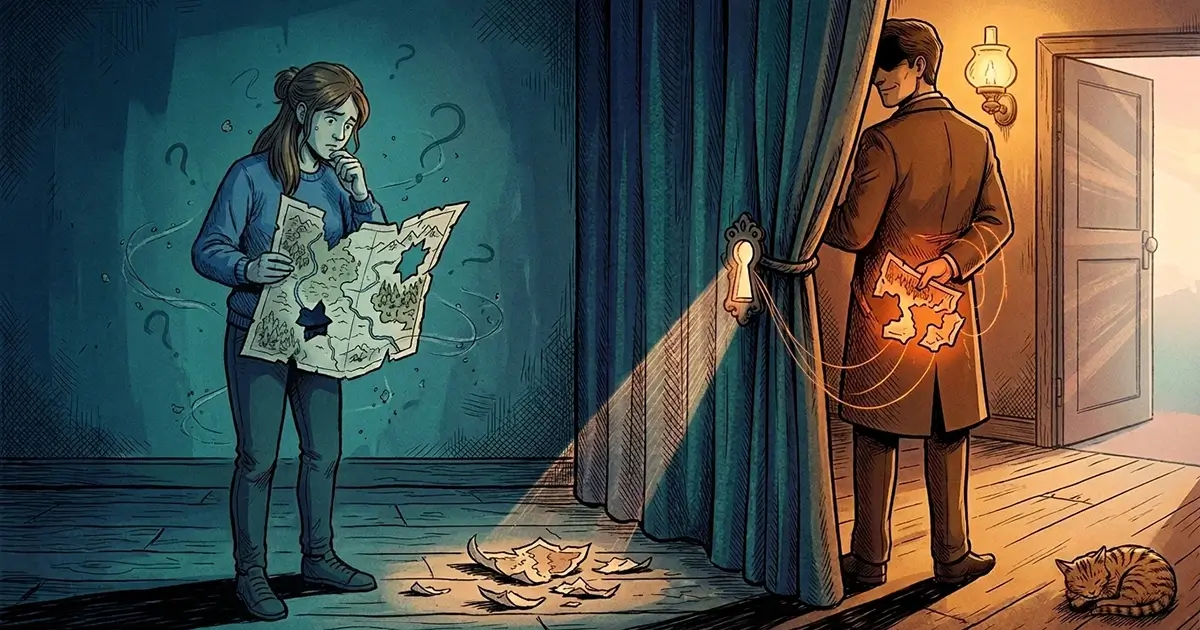
We are far better at judging other people's situations than our own. Distance removes the emotional fog. Describe your situation to a trusted friend or mentor as if it belonged to someone else.
When the decision touches your marriage, outside perspective matters even more. If you and your spouse feel stuck in a pattern simply because you've been together a long time, a licensed counselor can help you both talk honestly. And if there is ever a safety concern at home, please reach out to a professional or a trusted support service right away.
Example 4: The App Nobody Wanted

Years later, Sara becomes the new manager of a software team that has been building the same app for a year. Three teammates sit slumped around a prototype showing a sad, gray, cracked icon under a red traffic light. Nobody wants to suggest stopping, because so much has already been spent.
As the newcomer, Sara has no emotional attachment to the past. She asks plainly, "Would we greenlight this today?" The team admits they wouldn't. They redirect their energy to a second idea customers have actually been asking for, shown on another phone with a cheerful heart icon under a green light. The teammates start to smile, and one pushes the gray prototype away.
Step 5: Set a Decision Deadline and Define Your Exit Criteria
Open-ended commitment is where sunk costs multiply. Instead, decide in advance what success and failure look like. Try a statement like this:
"If I haven't reached X by [date], I will stop or change direction."
Writing this down while you're calm protects you from your future self, who will be tempted to say "just a little longer."
Example 5: The Grand Move Abroad

Not long after, Sara and Daniel are sitting at the kitchen table with a big world map, a pile of bills, and a toy airplane left from their original dream of moving overseas. Two overstuffed suitcases lean against the wall. The plan is straining their finances, yet they keep saying, "We've planned this for years. We can't back out now."
This time, they set a deadline and exit criteria together: if the move isn't affordable and comfortable by the end of the season, they will change the plan. When the date arrives, it isn't. Instead of failure, it feels like relief. Holding hands, they redraw the pencil line on the map from a faraway continent to a small town close to family. The suitcases get lighter, and so do they.
When Persistence Is the Right Choice
Overcoming the sunk cost fallacy does not mean giving up at the first sign of difficulty. Perseverance is a virtue when it's based on realistic hope for the future.
The difference lies in the reason. If you're continuing because of evidence, progress, and genuine desire, that's smart commitment. If you're continuing only because of what you've already spent, that's the fallacy. Use the five steps above to tell the difference honestly.
Frequently Asked Questions (FAQs)
1. What is the sunk cost fallacy in simple words?
It's the habit of continuing something just because you've already invested in it, even when continuing no longer makes sense. The past cost can't be recovered, so it shouldn't drive your next move.
2. What's an everyday example of the sunk cost fallacy?
Finishing a meal you don't enjoy because you paid for it, or staying in a bad movie because you bought the ticket. In both cases, the money is gone whether you stay or leave.
3. How do I stop thinking about sunk costs?
Label them as gone, ask the fresh start question, and focus only on future costs and benefits. Practice on small daily decisions first.
4. Is the sunk cost fallacy the same as being loyal or persistent?
No. Loyalty and persistence are based on future value and genuine commitment. The fallacy is based on avoiding the pain of admitting a loss.
5. Can the sunk cost fallacy affect my marriage?
Yes. It can show up in shared homes, businesses, or plans with a spouse. Honest conversations and, when needed, professional counseling help separate genuine commitment from habit.
6. How can I avoid sunk cost thinking in business?
Set clear milestones and exit criteria before you begin, and encourage team members to speak up when a project no longer makes sense.
Conclusion: Let the Future Lead
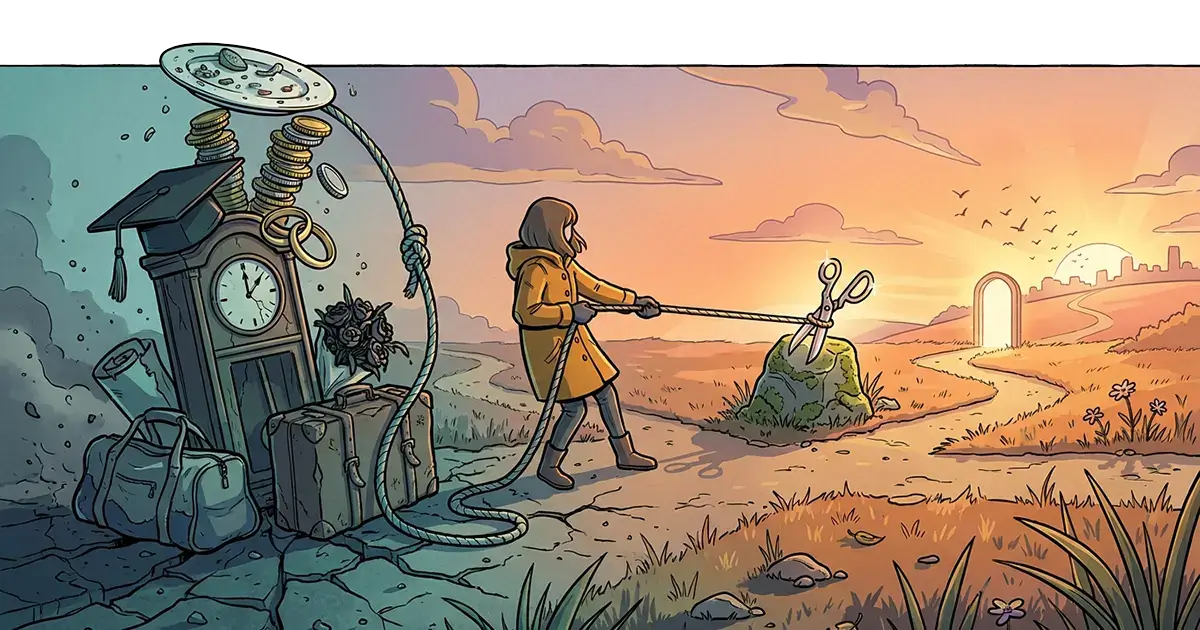
The sunk cost fallacy convinces us that the only way to honor our past is to keep repeating it. But the real way to honor the time, money, and effort you've invested is to use what you learned from it to make a better choice now.
To recap, here's how to overcome the sunk cost fallacy:
- Name your sunk costs and label them as gone.
- Ask the fresh start question.
- Focus only on future costs and benefits.
- Get an outside perspective.
- Set a deadline and clear exit criteria.
You don't have to make a dramatic decision today. Start by asking one honest question about one area of your life: "If I were starting fresh, would I choose this again?" Whatever the answer, you'll be deciding with clarity.
Have you ever been caught in the sunk cost trap, or finally walked away from something that wasn't working? We'd love to hear your story and your thoughts. Share them in the comments below!

Comments (0)
No comments yet. Be the first to share your thoughts!
Leave a comment
Your comment will appear after it's reviewed. Your email is never shown publicly.