
Sunk Cost Fallacy: Meaning, Examples & How to Stop It
The sunk cost fallacy explained: what it means, why we keep investing in losing choices, real-life examples, and how to break the pattern.
 Berry Bits
·
October 27, 2026
·
9 min read

You have probably sat through a terrible movie because you had already paid for the ticket. Maybe you kept wearing shoes that hurt because they were expensive. Most of us have done something like this, and the habit has a name: the sunk cost fallacy.
It quietly shapes decisions about jobs, marriages, money, and even dinner. In this guide, you will learn what it means, see four real-life examples, and pick up practical ways to stop it. Along the way, we have linked our related guides so you can go deeper on any part.
What is the Sunk Cost Fallacy?
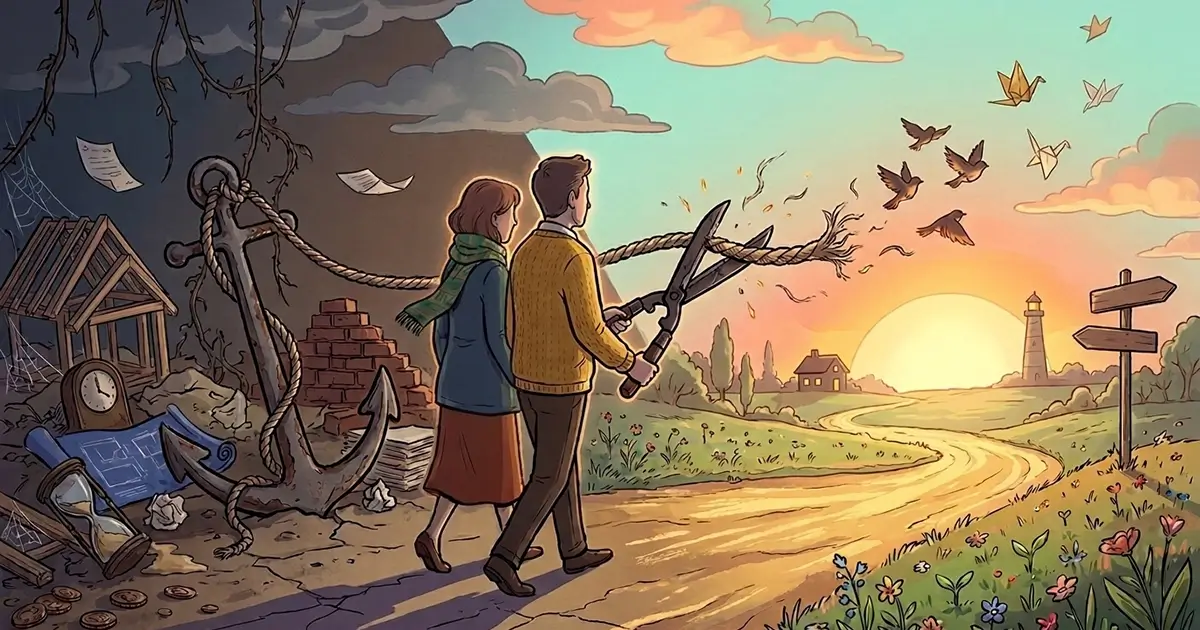
The sunk cost fallacy is the tendency to keep investing in something because of what you have already put into it, rather than what it will give you from here on. The "sunk" part means the time, money, or effort is already gone. You cannot get it back, no matter what you choose next.
The fallacy is in the thinking. Instead of asking, "Is this still worth it?", we ask, "How can I justify everything I have already spent?" Those two questions lead to very different decisions.
Sunk Cost Fallacy Meaning in Plain Words
Here is the simplest way to put it: past costs should not decide future choices. A smart decision looks only at what is ahead, including the future costs, the future benefits, and the realistic odds.
You may also see people search for the "sunken cost fallacy." It is a common spelling variation, and it refers to the exact same idea. Whether you say sunk or sunken, the lesson is the same: what is gone is gone.
Why It Feels So Hard to Let Go
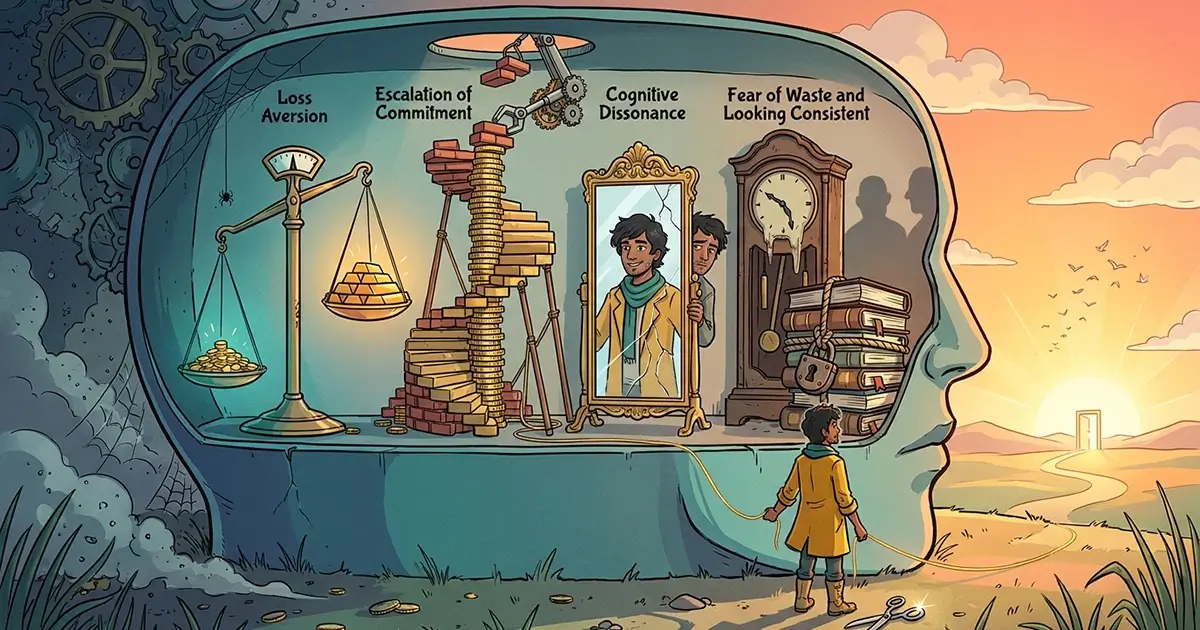
Letting go feels like admitting a mistake. It also feels like turning a "maybe" into a permanent loss. Our brains hate losses, so we keep pushing forward in the hope that the loss never becomes official.
This is closely tied to loss aversion and something researchers call escalation of commitment. We cover both in detail in Why We Fall for the Sunk Cost Fallacy (Psychology).
Pride plays a part too. Nobody enjoys saying, "I was wrong." So we double down instead.
Read More on This Topic
If you want to explore the topic from every angle, these three guides pair well with this article:
- Sunk Cost Fallacy Examples: 4 Real-Life Situations
- Why We Fall for the Sunk Cost Fallacy (Psychology)
- How to Overcome the Sunk Cost Fallacy: 5 Simple Steps
Sunk Cost Fallacy Examples in Real Life
The idea is easy to understand on paper. It is much harder to spot when you are living it. These four examples show how the fallacy appears in everyday situations. For even more scenarios, see our full list of sunk cost fallacy examples.
Example 1: Staying in the Wrong Job

Daniel spent six years building a career in a field he no longer enjoys. The hours are long, the pay has stalled, and he dreads Monday mornings. Still, he tells himself, "I have put too much into this to walk away now."
Notice what is driving that thought. It is not a belief that the job will improve. It is the six years he has already spent.
Those years are gone whether he stays or leaves. The only real question is how he wants to spend the next six.
How to spot it: You defend the job by listing the past ("I worked so hard to get here") instead of the future ("I can see myself growing here").
Example 2: Staying in an Unhappy Marriage Only Because of the Years Invested

This one is sensitive, so let us be careful. Deciding whether to stay in a marriage is deeply personal, and there is nothing wrong with fighting for a relationship that can still be saved.
The sunk cost trap appears when the only reason to stay is the time already spent. Picture Sara, who has been married for twelve years. She and her husband have grown apart, and neither has tried to fix things in years. When a friend asks why she stays, she says, "We have been together too long to quit now."
Twelve years is a real investment. But it is not a reason to stay, and it is not a reason to leave either.
A healthier question is, "Are we both willing to work on this, and do I see a realistic path to a better marriage?" If the answer is yes, couples counseling or honest conversations may help. If the answer is no, then the years behind her should not decide the years ahead.
How to spot it: Your main argument for staying is "how long it has been," not "how good it can be."
Example 3: Holding a Losing Investment

Priya bought shares in a company at a high price. Since then, the stock has dropped by half, and the company's outlook keeps getting worse. Her friends suggest selling and moving the money somewhere better.
She refuses. "I will sell when it gets back to what I paid," she says.
That is sunk cost thinking. The market does not know or care what she paid. The only useful question is, "If I had this money in cash today, would I buy this stock?" If the answer is no, then holding on is a decision to buy it again, just in slow motion.
This also shows up in business. Companies sometimes pour more money into a failing product because they have already spent millions on it. That is the same trap at a larger scale.
How to spot it: You are waiting to "break even" instead of judging the investment on its current merits.
Note: This is general information, not financial advice. For decisions about your own money, consider speaking with a qualified professional.
Example 4: Finishing a Meal, a Show, or a Purchase You Regret

Sunk costs show up in small, daily choices too. You order a huge meal, feel full halfway through, and keep eating because you paid for it. You buy a gym membership, stop enjoying it, and keep paying month after month so the original fee does not feel wasted.
Shopping works the same way. Think about the pricey jacket that never fit right. It stays in your closet for years because giving it away feels like admitting the money was wasted.
In the meal example, there are even two costs: the money you already spent and the discomfort you take on by eating more. The money is gone either way. Only the discomfort is still your choice.
How to spot it: You keep using, wearing, or paying for something you do not enjoy, just to avoid feeling wasteful.
Warning Signs You Are Caught in the Sunk Cost Trap
The fallacy is sneaky because it feels like loyalty or determination. Here are some signs to watch for:
- You say, "I have come too far to quit."
- You keep going even though you no longer enjoy it or believe in it.
- You would give a friend the opposite advice if they were in your shoes.
- You feel guilty about the past more than hopeful about the future.
- You avoid looking at honest numbers, feedback, or results.
If two or three of these sound familiar, it is worth pausing to look at the decision with fresh eyes.
How to Stop the Sunk Cost Fallacy
The good news is that you can train yourself to think differently. Here are a few simple habits that help.
Ask the Fresh Start Question
Imagine you were starting from zero today. Knowing what you know now, would you choose this job, project, or purchase again? If not, that is a strong signal to rethink.
Focus Only on Future Costs and Benefits
Write down what staying will cost you from this point forward in time, money, energy, and stress. Then write down what you realistically expect to gain. Leave the past out of the list completely.
Set Exit Points in Advance
Before you begin something, decide when you will reassess. For example, "If this project is not profitable by June, I will stop." Rules made early are easier to follow than decisions made in the heat of the moment.
Talk to Someone Outside the Situation
A trusted friend or mentor does not carry your emotional attachment to the past. Ask what they would do in your position. Their answer often feels refreshingly clear.
Want a complete walkthrough? Our guide on how to overcome the sunk cost fallacy breaks it down into five simple steps you can start using today.
Frequently Asked Questions (FAQs)
What is a sunk cost fallacy?
A sunk cost fallacy is a thinking error in which you keep investing time, money, or effort into something because of what you have already spent, even when the future looks poor. The past cost cannot be recovered, so it should not drive the decision.
What is sunk cost fallacy in simple words?
In simple words, it means refusing to quit something because you have already put a lot into it. The better approach is to ask whether continuing is worth it from today forward.
Is the sunk cost fallacy the same as the sunken cost fallacy?
Yes. "Sunken cost fallacy" is a common variation of the term, and both phrases describe the same concept. The standard version used in psychology and economics is "sunk cost fallacy."
Why do people fall for the sunk cost fallacy?
People fall for it because of loss aversion, pride, and the desire to feel consistent. Quitting feels like making the loss real, so we keep going. You can read more in our article on the psychology behind the sunk cost fallacy.
Is it ever okay to continue after investing a lot?
Yes, as long as the decision is based on future value and not past spending. Continuing is fine when you honestly believe the benefits ahead outweigh the costs ahead. The problem is only when the past is the sole reason.
How can I avoid the sunk cost fallacy in everyday life?
Ask yourself the fresh start question, focus on future costs and benefits, set exit points early, and get an outside opinion. Small habits like these add up over time.
Final Thoughts
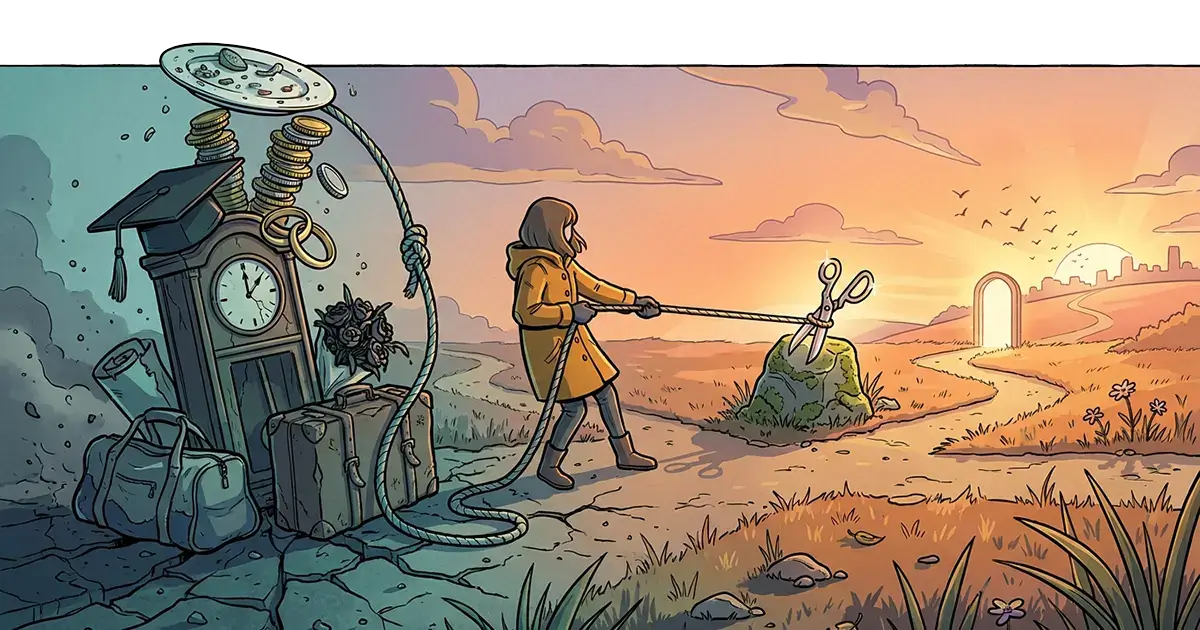
The sunk cost fallacy affects almost everyone, from the way we handle careers and marriages to the way we handle money and meals. It does not mean you are foolish. It means you are human.
What matters is learning to notice it. The next time you hear yourself say, "I have already put so much into this," stop and ask a better question: "What is the best choice from here?"
Let go of what is already gone, and put your energy where it can still make a difference.
Have you ever fallen for the sunk cost fallacy, or found a way to break free from it? We would love to hear your story, so share your thoughts in the comments below!
Comments (0)
No comments yet. Be the first to share your thoughts!
Leave a comment
Your comment will appear after it's reviewed. Your email is never shown publicly.