
Zeigarnik Effect in Relationships: Why Unfinished Conflicts Linger
The Zeigarnik Effect explains why unresolved arguments and unspoken feelings stay on your mind long after a conversation ends. See why.
 Berry Bits
·
July 29, 2026
·
9 min read
Berry Bits
·
July 29, 2026
·
9 min read
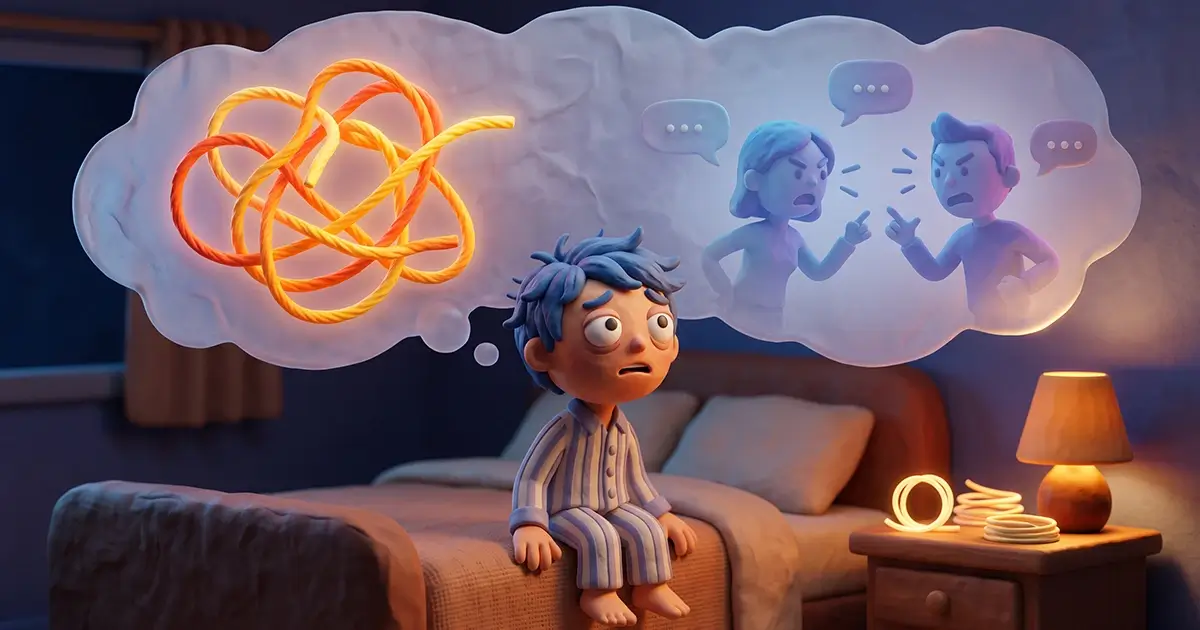
Ever notice how a fight from three days ago is still playing in your head, but the nice dinner you had last night barely registers? That's not you being petty or dramatic. It's your brain doing exactly what it's wired to do.
Psychologists call this the Zeigarnik Effect — the tendency to remember unfinished tasks far more vividly than completed ones. And in relationships, unfinished business doesn't just mean chores or plans. It means arguments that trailed off without resolution, feelings that never got said out loud, and questions that got swallowed instead of asked.
Most people assume they're just "bad at letting things go." But the pattern is far more common — and far more predictable — than that. Once you understand the mechanism behind it, the late-night replays start to make a lot more sense.
What Is the Zeigarnik Effect, Exactly?
The effect is named after Bluma Zeigarnik, a Soviet psychologist who noticed waiters could remember complex, unpaid orders in perfect detail — but forgot them instantly once the bill was settled. Her follow-up research confirmed it: an open loop in the mind demands attention. A closed one gets filed away.
Your brain treats emotional loose ends the same way it treats that unpaid restaurant tab. If a conversation ends without resolution, part of your mind keeps the tab open, quietly running in the background.
This is why one unresolved disagreement can outweigh a dozen peaceful evenings. The peaceful evenings got closed out. The disagreement didn't.
Why This Hits Differently in Relationships
Unfinished business with a stranger is forgettable. Unfinished business with someone you love is a different story, because the stakes are personal and ongoing.
- A few reasons this plays out so intensely between partners:
- You'll see this person again, so the tension has nowhere to go.
- Emotional threads carry more weight than task-based ones.
- Silence after conflict often feels like danger, not peace.
The mind doesn't just remember the argument. It rehearses it, replays it, and tries to write an ending for it — often at 2 a.m., when you're trying to sleep.
Why the Brain Prioritizes What's Unfinished
There's a practical reason your mind works this way. In evolutionary terms, an unfinished task was often a live problem — a predator not yet dealt with, a shelter not yet built. Attention had survival value, so the brain evolved to keep unresolved matters close to the surface until they were handled.
That wiring hasn't updated for modern relationships. Your brain doesn't distinguish between "unfinished hunting trip" and "unfinished apology." Both get flagged as open, both get replayed, and both pull focus until something resolves them.
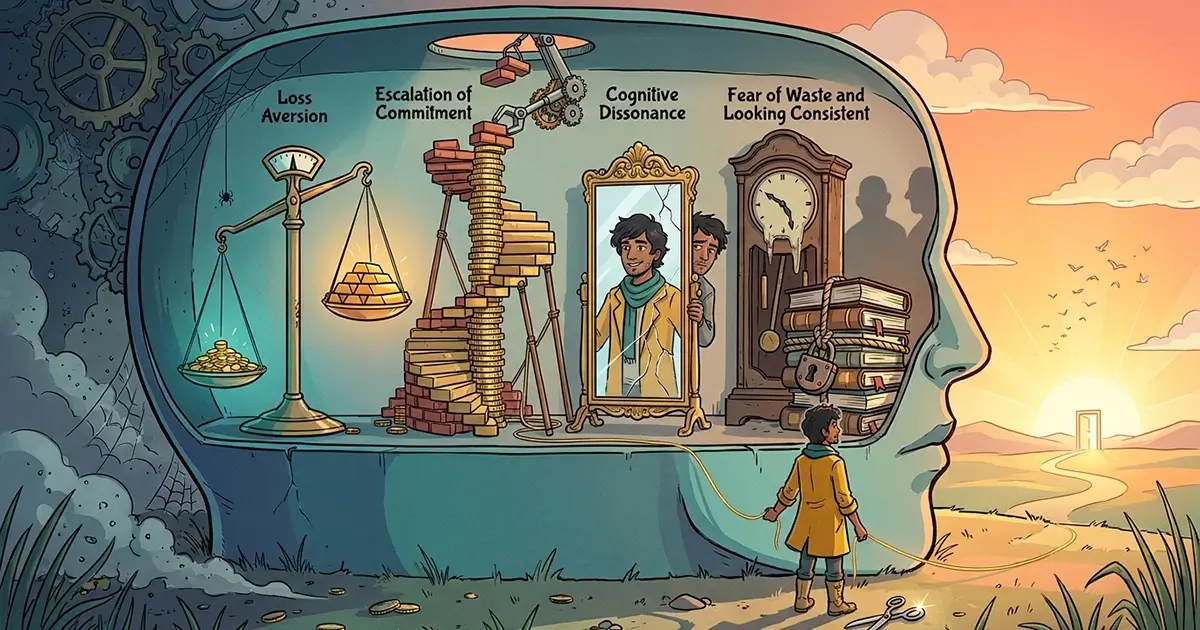
This is also why distraction rarely works as a long-term fix. You can watch a show or scroll your phone to quiet an open loop for an hour, but the moment your attention is free again, the loop tends to resurface. Real closure — not distraction — is what actually turns the replay off.
With that mechanism in mind, here's what it looks like in practice, across four common relationship situations.
Example 1: The Argument That Ended in Silence

Picture a couple who argue about finances. One person raises a concern about spending. The other gets defensive, the tone sharpens, and then — nothing. No resolution, no apology, just a mutual decision to "drop it" and watch TV instead.
On the surface, it looks over. Underneath, it isn't.
The partner who raised the concern keeps replaying the exchange for days, mentally rehearsing what they should have said. The Zeigarnik Effect is doing its job: the brain flagged this as incomplete, so it keeps surfacing it for review, uninvited.
This is why "let's just drop it" rarely works. Dropping a topic doesn't close the loop — it just pauses the replay button.
Some couples mistake this quiet for peace. But quiet isn't the same as resolved. The topic will usually resurface later, often at the worst possible moment, because the original loop was never actually closed — just muted.
Example 2: The Text That Never Got a Real Answer

Someone sends a vulnerable message — maybe admitting they felt hurt, or asking where the relationship is headed. The reply comes back short: "haha yeah let's talk later." Later never quite arrives.
Now the sender is stuck holding an open question with no answer attached to it.
Days pass. They find themselves rereading the message thread, imagining different responses, drafting explanations in their head that they never send. This is the Zeigarnik Effect operating almost perfectly: an emotional bid that never got closure keeps generating mental noise, long after the original moment has passed.
Compare that to a direct "I hear you, let's talk tonight at 8." Even a short, clear commitment to closure quiets the loop, because the brain now has an expected endpoint.
Example 3: The Breakup With No Explanation

Few things trigger the Zeigarnik Effect harder than a relationship that ends without a clear reason.
Someone gets ghosted, or hears a vague "it's not you, it's me" and nothing more. There's no real conversation, no honest account of what went wrong — just an abrupt stop.
Months later, they're still turning it over. Not because they're not over the person, necessarily, but because the story never got an ending. The mind treats an unexplained breakup like an unsolved case file, and it keeps reopening it, searching for the missing pieces.
This is part of why closure conversations, even painful ones, tend to help people move on faster than silence does. A hard truth still counts as an ending. Silence doesn't.
Example 4: The Recurring Fight About the Same Thing

Some couples don't have one big unresolved fight — they have the same small fight, over and over, about dishes, screen time, or in-laws.
Each round ends the same way: a short truce, a change of subject, and no actual resolution. Nothing is technically "wrong" between the fights, but the topic never fully closes.
This is a slower-burning version of the Zeigarnik Effect. Instead of one intrusive memory, it's a low hum of tension that resurfaces every time the topic comes up again, because the brain never got to file it as "resolved." Each new round just adds fuel to an already-open loop.
Couples who break this cycle usually don't do it by avoiding the topic — they do it by having one real conversation that actually closes the loop, instead of ten short ones that keep reopening it.
It's worth noticing that recurring fights are rarely about the surface issue after a while. The dishes stop being about dishes. What keeps the loop open is the underlying feeling — of not being heard, or not being prioritized — that never gets addressed directly, even as the surface argument gets "resolved" again and again.
How to Actually Close the Loop
If open loops are the problem, closure is the fix — but not just any closure. Vague reassurance doesn't quiet the mind. Specific resolution does.
A few things that genuinely help:
- Name the unresolved point out loud, instead of letting it fade into silence.
- Agree on a specific time to revisit a conversation, rather than a vague "later."
- Say the hard thing directly, even if it's uncomfortable, instead of hinting at it.
- Write down what's bothering you if the other person truly isn't available yet — this alone can quiet the mental loop somewhat, even before the real conversation happens.
None of these require getting everything perfectly resolved in one sitting. What matters is giving the mind a clear sense that the loop is being handled, not ignored.
Timing matters too. Trying to force a full resolution in the heat of an argument often backfires, since neither person is in a state to actually listen. A short, honest bridge — "I don't want to leave this hanging, can we come back to it tonight?" — does more for the Zeigarnik loop than either pushing through an unproductive fight or dropping it entirely.
It also helps to separate the need for resolution from the need to "win" the conversation. Loops often stay open not because the issue itself is complex, but because both people are waiting for the other to concede first. Naming that dynamic out loud — "I'm not trying to win this, I just want us to land somewhere" — can be enough to unstick a conversation that's been circling for days.
FAQs
Is the Zeigarnik Effect the same as overthinking?
Not exactly. Overthinking is the behavior; the Zeigarnik Effect is the underlying mechanism that often drives it. Your brain isn't malfunctioning when it replays an unresolved conflict — it's doing what it's designed to do with unfinished business.
Why do I remember fights more than good moments?
Good moments usually feel complete on their own — they don't need anything further from you. Fights often end without resolution, which keeps them mentally "open" and easier to recall, even if there were far more good moments than bad ones.
Can this effect explain why I can't stop thinking about an ex?
Often, yes — especially if the relationship ended abruptly or without explanation. The mind tends to hold onto unfinished stories longer than finished ones, which is part of why unclear endings can be harder to move past than clear, if painful, ones.
Does talking about the issue always help?
Usually, but the quality of the conversation matters more than just having one. A vague or rushed exchange can leave the loop just as open as silence would. Direct, specific communication tends to bring the sense of resolution that quiets the mental replay.
Is there a healthy way to use this effect on purpose?
Yes — some people intentionally leave a warm note unfinished, or end a date with a hint of what's next, to keep excitement alive. The same mechanism that fuels anxious replaying can also fuel anticipation, when it's used with care and not left unresolved for too long.
Final Thoughts
The Zeigarnik Effect isn't a flaw in how you process relationships — it's a feature of how memory works, applied to the one area of life where loose ends feel the heaviest. Unresolved arguments, half-answered questions, and unexplained endings don't linger because you're overly sensitive. They linger because your mind is still waiting for the ending it never got.
The good news is that closure doesn't have to be dramatic to work. It just has to be real. A direct conversation, a specific commitment to revisit a hard topic, or an honest explanation can do more to quiet a racing mind than weeks of trying to distract yourself from it.
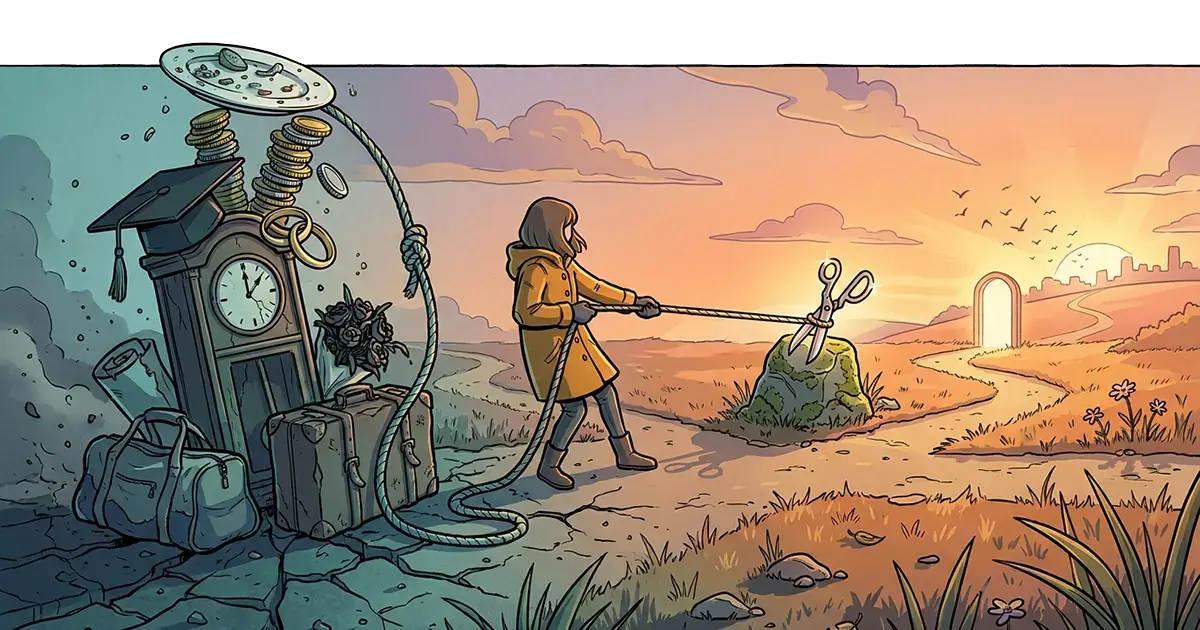
The next time a conflict fades into silence instead of resolution, remember: your brain isn't going to let it go on its own. Somebody has to close the loop.


Comments (0)
No comments yet. Be the first to share your thoughts!
Leave a comment
Your comment will appear after it's reviewed. Your email is never shown publicly.